



Understandably, people want to know at what age you tend to be the happiest so they can plan for it and enjoy as it happens. However, there is disparity among the numerous articles and research that pinpoints a specific age or age range. Some believe that your golden years at age 60 and above are your happiest, others cite mid-30s, or even as late as a person’s 70s. You may know people who claim their 20s were the happiest days of their lives. However, the age that you’ll be the happiest is less of a when question and more of a where.
Many studies have determined that the happiest age depends on where the person lives and has grown up rather than a particular age. Traditionally in the United States, prime happiness peaked at ages 30 and 70 respectively, but that is no longer the case. Given various economic stop-gaps and events such as COVID-19 impacting generations, younger ages are typically more miserable than older folks, achieving more happiness later in their lives compared to Boomers. This is due to American Millennials and generations behind them still struggling with creating careers, affording to have families, and other milestones that were traditionally a part of young adulthood. These things continue to be issues deep into their 30s and even 40s while Americans over the age of 60 are reportedly happier.
@winela.world What has been YOUR happiest age? #happiness #age #graph #stats #GonnaKnow #interestingfacts #thecoldestwater @thecoldestwater
Location and expectations have a great deal to do with happiness. Unlike America, places such as Lithuania and Serbia have significantly higher rates of happiness among their young people since they are projected to have better lifestyles than their parents did. In poorer nations, the typical “U-shape curve” that dips happiness down for middle-aged people is reversed as middle-aged folks have more stability than their younger counterparts but older folks contend with illness, aging bodies, and the lack of social security more fiercely than richer countries that provide better care for elders.
Location as a happiness factor isn’t limited to country, though, as where you live and grow up can impact a person’s happiness within America. Whether you grow up in a rich neighborhood or one that provides certain amenities paid for by local tax dollars can influence how happy your childhood is compared to adulthood. If your location has better or easier access to education and opportunities for personal growth, you not only can have a happy childhood but an advantage that could lead to a happier adulthood compared to someone who had to move from a lower income situation and is working to pursue a higher one.
@top5expensive The 5 happiest state in U.S #top5 #happiest #state
While age and location are definitely impactful factors on a person’s happiness, is there something more tangible we can control that could make us happier? Is there something we can do regardless of age, economics, or location that can boost our happiness? Well, an 86-year-long Harvard study might have found that answer: generativity.
Generativity is working and investing in a better future for upcoming generations, regardless of whether or not you have children yourself. It can take the form of volunteering to teach or coach kids after school in a certain skill, trade, or sport. It can be developing a public neighborhood garden and food bank to ensure the community and youngsters are always fed. It could be running for office to pass bills to curb climate change to make it easier for future generations to bounce back from the planet overheating. In short, generativity is giving back.
@ngkoksongofficial True happiness comes from caring for others. When I was at GIC, I derived happiness from contributing to the welfare of Singaporeans. So whatever you do, consider asking yourself ‘how can I contribute to the happiness and welfare of another person?’ Acts of kindness and generosity expand your being. But when you are self centred, you contract into your ego. You have to understand this through your experiences in life ❤️ #ngkoksong2023 #unitedforourfuture #lifehacks #adulting #happiness
It may sound corny or idealistic, but science backs it up. Making life better for others in turn makes you happier and your life better due to feel-good brain chemical dumps and just seeing folks say “thank you!” It’s not easy and it requires effort, but it’s worth it if it means you get to experience a happier life earlier.
This article originally appeared in June.











 Ultrasound of human baby.Image via
  IVF animated process.Image via
  A couple speaks with a fertility professional.Image via
 Love, Mom.Photo from Heidi Johnson
  A teen boy having a hard time.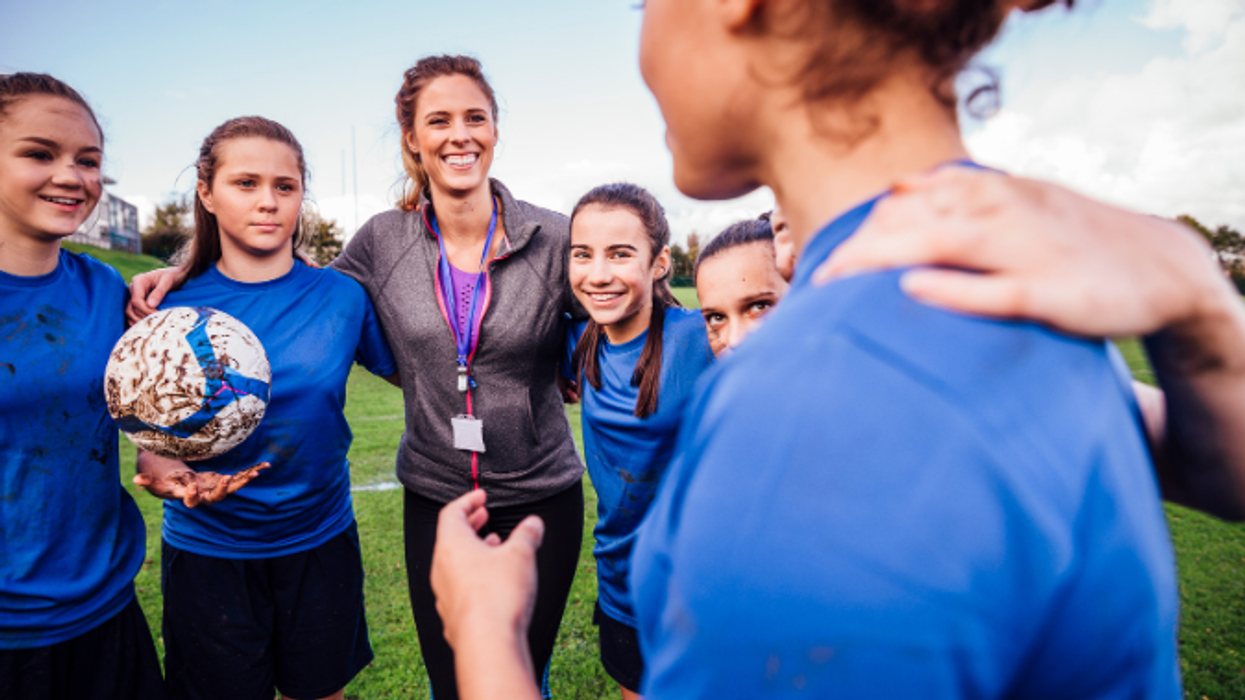


 Hands hold a digital representation of the brain.Image via
  Mother and daughter work a puzzle.Image via
  Man and woman connect under the sunshine.Image via
 The obituary paints a comic, if bleak, picture.
  A Facebook post about the obituary.
 Woman feeling pain in buttocks area.Image via Canva - Photo by Kaspars Grinvalds
 An animated towel dry.
Why do some folks use social media but don't engage?
Psychologist says people who never comment on social media share these 5 positive traits
For over 20 years, social media has developed into a staple in many people’s day-to-day lives. Whether it’s to keep in communication with friends and family, following the thoughts of celebrities, or watching cat videos while sipping your morning coffee, there seem to be two types of social media users: commenters and lurkers.
The term “lurker” sounds equally mysterious and insidious, with some social media users writing them off as non-participants at best or voyeurs at worst. However, mindfulness expert Lachlan Brown believes these non-commenters have some very psychologically positive and healthy traits. Let’s take a look at how each one of these traits could be beneficial and see how fruitful lurking might be even though it can drive content creators crazy.
1. Cautious about vulnerability
Consciously or not, making a post online or commenting on one puts you and your words out there. It’s a statement that everyone can see, even if it’s as simple as clicking “like.” Doing so opens yourself up to judgment, with all the good, bad, and potential misinterpretation that comes with it. Non-commenters would rather not open themselves up to that.
These silent users are connected to a concept of self-protection by simply not engaging. By just scrolling past posts or just reading/watching them without commentary, they’re preventing themselves from any downsides of sharing an opinion such as rejection, misunderstanding, or embarrassment. They also have more control on how much of themselves they’re willing to reveal to the general public, and tend to be more open face-to-face or during one-on-one/one-on-few private chats or DMs. This can be seen as a healthy boundary and prevents unnecessary exposure.
Considering many comment sections, especially involving political topics, are meant to stir negative emotional responses to increase engagement, being extra mindful about where, when, and what you comment might not be a bad idea. They might not even take the engagement bait at all. Or if they see a friend of theirs post something vulnerable, they feel more motivated to engage with them personally one-on-one rather than use social media to publicly check in on them.
2. Analytical and reflective mindset
How many times have you gone onto Reddit, YouTube, or any other site and just skimmed past comments that are just different versions of “yes, and,” “no, but,” or “yes, but”? Or the ever insightful, formerly popular comment “First!” in a thread? These silent browsers lean against adding to such noise unless they have some valid and thoughtful contribution (if they bother to comment period).
These non-posters are likely wired on reflective thinking rather than their initial intuition. Not to say that all those who comment aren’t thoughtful, but many tend to react quickly and comment based on their initial feelings rather than absorbing the information, thinking it over, researching or testing their belief, and then posting it. For "lurkers," it could by their very nature to just do all of that and not post it at all, or share their thoughts and findings privately with a friend. All in all, it’s a preference of substance over speed.
3. High sense of self-awareness
Carried over from the first two listed traits, these silent social media users incorporate their concern over their vulnerability and their reflective mindset into digital self-awareness. They know what triggers responses out of them and what causes them to engage in impulsive behavior. It could be that they have engaged with a troll in the past and felt foolish. Or that they just felt sad after a post or got into an unnecessary argument that impacted them offline. By knowing themselves and seeing what’s being discussed, they choose to weigh their words carefully or just not participate at all. It’s a form of self-preservation through restraint.
4. Prefer to observe rather than perform
Some folks treat social media as information, entertainment, or a mix of both, and commenting can feel like they’re yelling at the TV, clapping alone in a movie theater when the credits roll, or yelling “That’s not true!” to a news anchor that will never hear them. But contrary to that, social media is a place where those yells, claps, and accusations can be seen and get a response. By its design, social media is considered by experts and the media as performative, regardless of whether it is positive or negative. Taking all of the previously mentioned traits into account, one can see why they would prefer to “observe the play” rather than get up on the stage of Facebook or X.
On top of that, these non-commenters could be using social media differently than those who choose to fully engage with it. Using this type of navigation, there may be nothing for them to comment about. Some commenters are even vying for this for their mental health. There are articles about how to better curate your social media feeds and manipulate algorithms to create a better social media experience to avoid unnecessary conflict or mentally tiring debate.
If you go on a blocking spree on all of your accounts and just follow the posters that boost you, it could turn your social media into a nice part of your routine as you mainly engage with others face-to-face or privately. In terms of commenting, if your curated Instagram is just following cute dogs and all you have to offer for a comment is “cute dog,” you might just enjoy the picture and then move on with your day rather than join in the noise. These non-commenters aren’t in the show and they’re fine with it.
5. Less motivated by social validation
The last trait that Brown showcases is that social media users who browse without posting tend to be independent from external validation, at least online. Social media is built to grow through feedback loops such as awarding likes, shares, and reposts of your content along with notifications letting you know that a new person follows you or wants to connect. This can lead many people to connect their activity on social media with their sense of self worth, especially with adolescents who are still figuring out their place in the world and have still-developing brains.
Engaging in social media via likes, shares, comments, and posts rewards our brains by having them release dopamine, which makes us feel good and can easily become addictive. For whatever reason, non-commenters don’t rely on social media as a means to gauge their social capital or self worth. This doesn’t make them better than those who do. While some non-commenters could have healthier ways to boost their self worth or release dopamine into their systems, many get that validation from equally unhealthy sources offline. That said, many non-commenters’ silence could be a display of independence and self confidence.
Whether you frequently comment online or don’t, it’s good to understand why you do or don’t. Analyzing your habits can help you determine whether your online engagement is healthy, or needs to be tweaked. With that information, you can then create a healthy social media experience that works for you.