



Experience is a good thing. The older we get and the more mistakes that we put behind us, the wisdom gained has more than just incredible value for ourselves. Sharing these life lessons with younger generations is good for everyone. There is a wealth of information available to anyone seeking a little guidance in their lives.
A Redditor shared that they appreciated an old man's advice from something they had read: “My grandpa once told me 'if you get on the wrong train, get off at the nearest station, the longer it takes you to get off, the more expensive the return trip will be.' He wasn’t talking about trains.” Finding this advice quite helpful, they sought more wisdom from the old folks. Through a Reddit post people started sharing some sayings they were told growing up.
These are some of the most helpful suggestions for navigating life:
from AskOldPeopleAdvice
"Be nice to everybody you meet on the way up the ladder. You'll see the same faces on the way down."
Treating people with respect and kindness goes a long way in any situation. If there's one thing that's been proven time and again about successful people, it's never guaranteed and most likely not to last forever. If you fall from the heights of achievement, it's good to have the compassion and help from others when you try to get back up. If you kicked them in the face on your way to the top, there's a good chance you're probably going to receive the same back during any setback.
 Pinocchio falls off the ladder. media2.giphy.com
"It's never the wrong time to do the right thing."
There's a few ways to approach this concept. First being that living a life of integrity always has value. A good example, when people say it's such a small thing it doesn't matter, can make a difference. But if we can't deliver on the small things that aren't as important, it's unlikely we will be doing the right thing on the big ones either. The second concept could be a reflection on Dr. Martin Luther King Jr.'s quote in his speech to Oberlin College in 1964, "The time is always right to do what is right." Don't wait for the perfect moment or when it's most convenient. This is just giving power to a person's inaction, and there's no time to wait for social justice and civil rights.
"It's easier to STAY out of trouble than GET out of trouble."
This surrounds concepts like "pause before you act." It's a lot easier to be patient before a problem starts. Most of my own pitfalls in particular are of the "putting my foot in my mouth" kind that could have been avoided if I just sat for a second before I acted on the thought. I've heard the spiritual maxim that life gives us time on the really important decisions. Unless of course there's a car about to hit you so get out of the way.
 Kobe Bryant jumps car in commercial.media2.giphy.com
"The windshield is bigger than the rearview mirror for a reason."
This saying is about letting go of the past. It's important to learn from our successes and failures, but dwelling on them keeps us from accessing what's actually happening in the moment. If I have important decisions to make in my life and I'm still focused on the oops from a week ago, I might miss the opportunity to do something great today. All the sages suggest living in the today. Easier said than done, but knowing a healthy direction is helpful.
"Whenever it feels like an argument is brewing, ask yourself, is this the hill I want to die on?"
I've met plenty of people ready and motivated to have an aggressive conversation over any subject. It's easy to be triggered into a battle of ideas, especially when we feel that we're right and the other person is wrong. An older mentor gifted me an amazing concept that I do my best to employ whenever these situations come up: "Does it need to be said? Does it need to be said right now? And does it need to be said by me?" In most cases the answer is 'no' so I get to shut up. It's actually a nice relief.
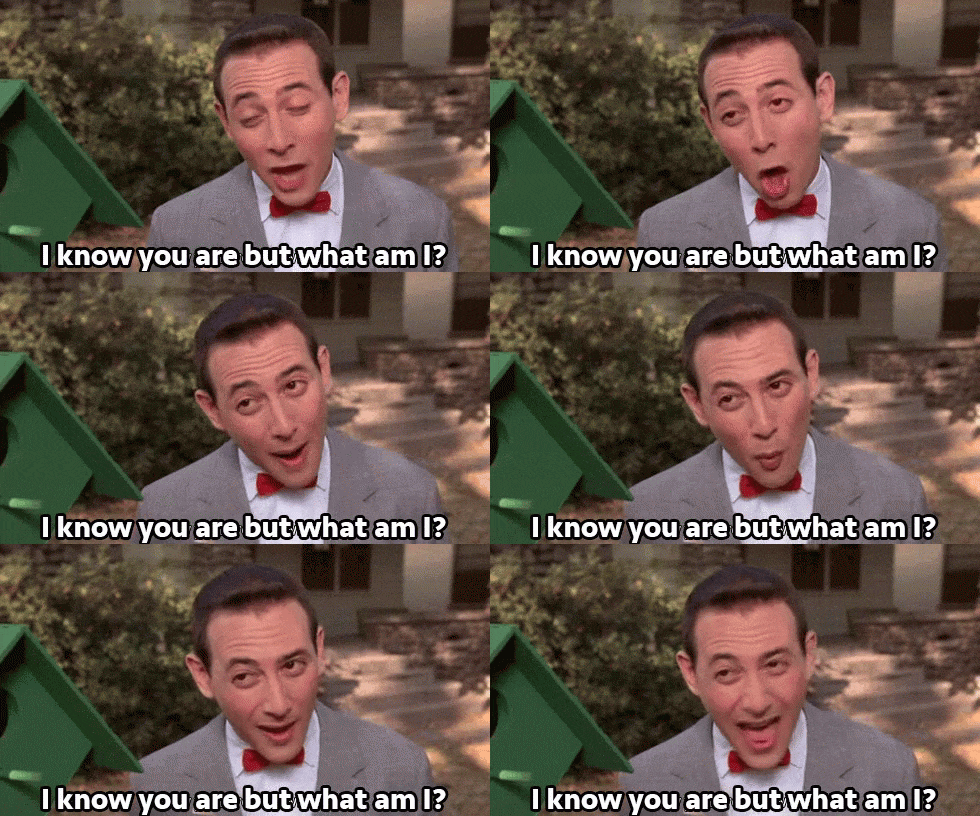 Pee Wee's Big Adventure the movie. media1.giphy.com
"You have two lives to live: the second begins when you realize you only have one."
This one hits me hard. It highlights how much time can be wasted pursuing and chasing the things that never mattered that much. Having a perspective shift and realizing delaying dreams, living passively, and avoiding risks is most likely not the life we want to reflect back upon. The book, Tuesdays with Morrie by Mitch Albom touches on this and showcases the importance of learning about love, life lessons, death, and forgiveness through meaningful interactions with Morrie, who is dying. It's incredibly helpful stuff.
"When you're worried about what other people are thinking about you, keep in mind that they aren't."
The basic truth is everyone is focused pretty much on their own journey first. Worrying about other people's opinions is often based on imagined judgements. Learning to live an authentic life and pursuing what one's own heart wants brings a liberated and confident lifestyle. Looking for outside affirmation can never live up to the tried-and-true power found in self esteem.
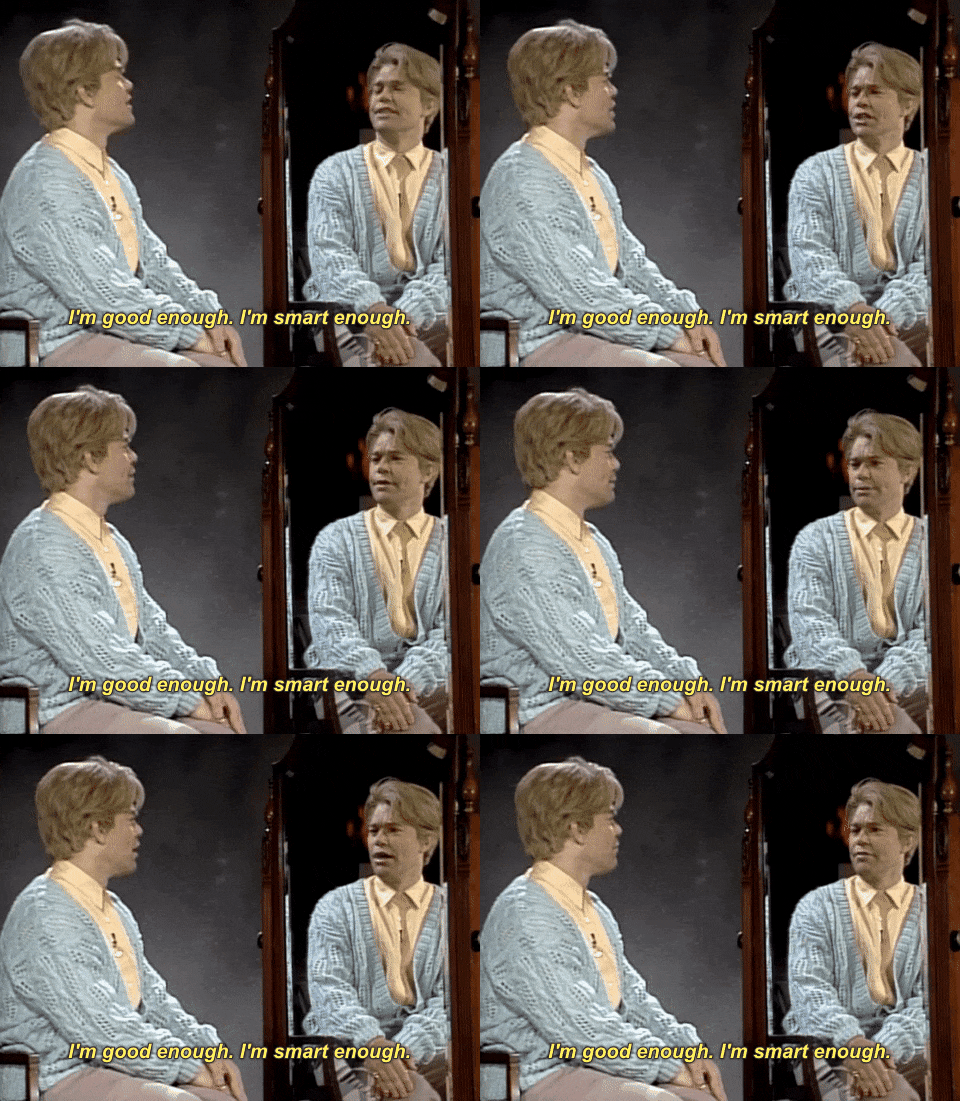 "I'm good enough..." Saturday Night live skit. media3.giphy.com
I've never come across anyone in their later years talking about how much they wished they could have worked more and spent less time with the people they loved and who loved them. This life thing is confusing, but the basics are pretty clear: seek out the wisdom of those who have done it before. Learning how to bring these philosophies into action can lead to a better experience and an overall good life.
This article originally appeared in May.










 Ultrasound of human baby.Image via
  IVF animated process.Image via
  A couple speaks with a fertility professional.Image via
 Love, Mom.Photo from Heidi Johnson
  A teen boy having a hard time.



 Hands hold a digital representation of the brain.Image via
  Mother and daughter work a puzzle.Image via
  Man and woman connect under the sunshine.Image via
 The obituary paints a comic, if bleak, picture.
  A Facebook post about the obituary.
Why do some folks use social media but don't engage?
Psychologist says people who never comment on social media share these 5 positive traits
For over 20 years, social media has developed into a staple in many people’s day-to-day lives. Whether it’s to keep in communication with friends and family, following the thoughts of celebrities, or watching cat videos while sipping your morning coffee, there seem to be two types of social media users: commenters and lurkers.
The term “lurker” sounds equally mysterious and insidious, with some social media users writing them off as non-participants at best or voyeurs at worst. However, mindfulness expert Lachlan Brown believes these non-commenters have some very psychologically positive and healthy traits. Let’s take a look at how each one of these traits could be beneficial and see how fruitful lurking might be even though it can drive content creators crazy.
1. Cautious about vulnerability
Consciously or not, making a post online or commenting on one puts you and your words out there. It’s a statement that everyone can see, even if it’s as simple as clicking “like.” Doing so opens yourself up to judgment, with all the good, bad, and potential misinterpretation that comes with it. Non-commenters would rather not open themselves up to that.
These silent users are connected to a concept of self-protection by simply not engaging. By just scrolling past posts or just reading/watching them without commentary, they’re preventing themselves from any downsides of sharing an opinion such as rejection, misunderstanding, or embarrassment. They also have more control on how much of themselves they’re willing to reveal to the general public, and tend to be more open face-to-face or during one-on-one/one-on-few private chats or DMs. This can be seen as a healthy boundary and prevents unnecessary exposure.
Considering many comment sections, especially involving political topics, are meant to stir negative emotional responses to increase engagement, being extra mindful about where, when, and what you comment might not be a bad idea. They might not even take the engagement bait at all. Or if they see a friend of theirs post something vulnerable, they feel more motivated to engage with them personally one-on-one rather than use social media to publicly check in on them.
2. Analytical and reflective mindset
How many times have you gone onto Reddit, YouTube, or any other site and just skimmed past comments that are just different versions of “yes, and,” “no, but,” or “yes, but”? Or the ever insightful, formerly popular comment “First!” in a thread? These silent browsers lean against adding to such noise unless they have some valid and thoughtful contribution (if they bother to comment period).
These non-posters are likely wired on reflective thinking rather than their initial intuition. Not to say that all those who comment aren’t thoughtful, but many tend to react quickly and comment based on their initial feelings rather than absorbing the information, thinking it over, researching or testing their belief, and then posting it. For "lurkers," it could by their very nature to just do all of that and not post it at all, or share their thoughts and findings privately with a friend. All in all, it’s a preference of substance over speed.
3. High sense of self-awareness
Carried over from the first two listed traits, these silent social media users incorporate their concern over their vulnerability and their reflective mindset into digital self-awareness. They know what triggers responses out of them and what causes them to engage in impulsive behavior. It could be that they have engaged with a troll in the past and felt foolish. Or that they just felt sad after a post or got into an unnecessary argument that impacted them offline. By knowing themselves and seeing what’s being discussed, they choose to weigh their words carefully or just not participate at all. It’s a form of self-preservation through restraint.
4. Prefer to observe rather than perform
Some folks treat social media as information, entertainment, or a mix of both, and commenting can feel like they’re yelling at the TV, clapping alone in a movie theater when the credits roll, or yelling “That’s not true!” to a news anchor that will never hear them. But contrary to that, social media is a place where those yells, claps, and accusations can be seen and get a response. By its design, social media is considered by experts and the media as performative, regardless of whether it is positive or negative. Taking all of the previously mentioned traits into account, one can see why they would prefer to “observe the play” rather than get up on the stage of Facebook or X.
On top of that, these non-commenters could be using social media differently than those who choose to fully engage with it. Using this type of navigation, there may be nothing for them to comment about. Some commenters are even vying for this for their mental health. There are articles about how to better curate your social media feeds and manipulate algorithms to create a better social media experience to avoid unnecessary conflict or mentally tiring debate.
If you go on a blocking spree on all of your accounts and just follow the posters that boost you, it could turn your social media into a nice part of your routine as you mainly engage with others face-to-face or privately. In terms of commenting, if your curated Instagram is just following cute dogs and all you have to offer for a comment is “cute dog,” you might just enjoy the picture and then move on with your day rather than join in the noise. These non-commenters aren’t in the show and they’re fine with it.
5. Less motivated by social validation
The last trait that Brown showcases is that social media users who browse without posting tend to be independent from external validation, at least online. Social media is built to grow through feedback loops such as awarding likes, shares, and reposts of your content along with notifications letting you know that a new person follows you or wants to connect. This can lead many people to connect their activity on social media with their sense of self worth, especially with adolescents who are still figuring out their place in the world and have still-developing brains.
Engaging in social media via likes, shares, comments, and posts rewards our brains by having them release dopamine, which makes us feel good and can easily become addictive. For whatever reason, non-commenters don’t rely on social media as a means to gauge their social capital or self worth. This doesn’t make them better than those who do. While some non-commenters could have healthier ways to boost their self worth or release dopamine into their systems, many get that validation from equally unhealthy sources offline. That said, many non-commenters’ silence could be a display of independence and self confidence.
Whether you frequently comment online or don’t, it’s good to understand why you do or don’t. Analyzing your habits can help you determine whether your online engagement is healthy, or needs to be tweaked. With that information, you can then create a healthy social media experience that works for you.