


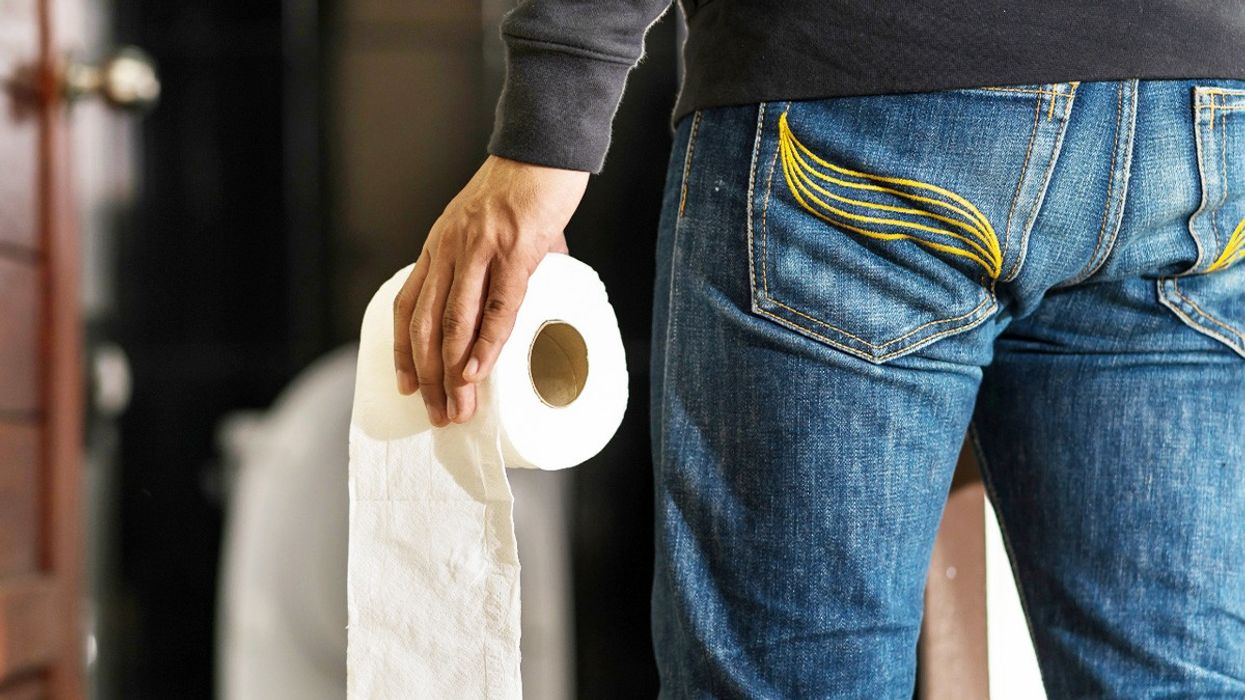
Getting rid of your, er, waste is an uncomfortable subject. But we all do it, hopefully on the daily, and a few times if your digestion is up to it. We eat and then get rid of the stuff our bodies don't need, so we need to talk about clean-up after a bowel movement.
Curtis Asbury, MD a dermatologist practicing in Selbyville, Delaware, sees a lot of people complaining about irritation on their behinds. Patients will come into his office with an irritated rectum and emphatically proclaim they aren't doing anything wrong. His simple response, "You're not wiping correctly."
In an interview with Mental Floss, Asbury said, "It's called perianal dermatitis." This inflammation of the skin around the anus is most often caused by poor anal hygiene. Some of the behaviors involved with that: wiping poorly, wiping infrequently, wiping overzealously, and wiping with things our bodies don't like and have allergic reactions to.
 Woman feeling pain in buttocks area.Image via Canva - Photo by Kaspars Grinvalds
Here are five pro tips for a pristine butt:
Wipe in the correct direction
There's a right and wrong direction to this thing? Yep. We all should be wiping front to back. In order to avoid urinary tract infections and getting feces in the vaginal canal, it's been suggested women should always wipe front to back. When I was a teenager, a girlfriend was mortified I did it the other way. Apparently she was right.
Be thorough but be tender
Some people really want to be clean, so aggressively attacking the area is the thought process. "I see people scrubbing hard," Dr. Asbury said. "That just makes the problem worse." We want to gently wipe until we see clean paper. Then it's blotting and dabbing to get at the extra moisture. Excessive wiping can bring tears to the anal tissue, so clean the area instead of approaching it like trying to remove a layer of paint off the wall with a scraper.
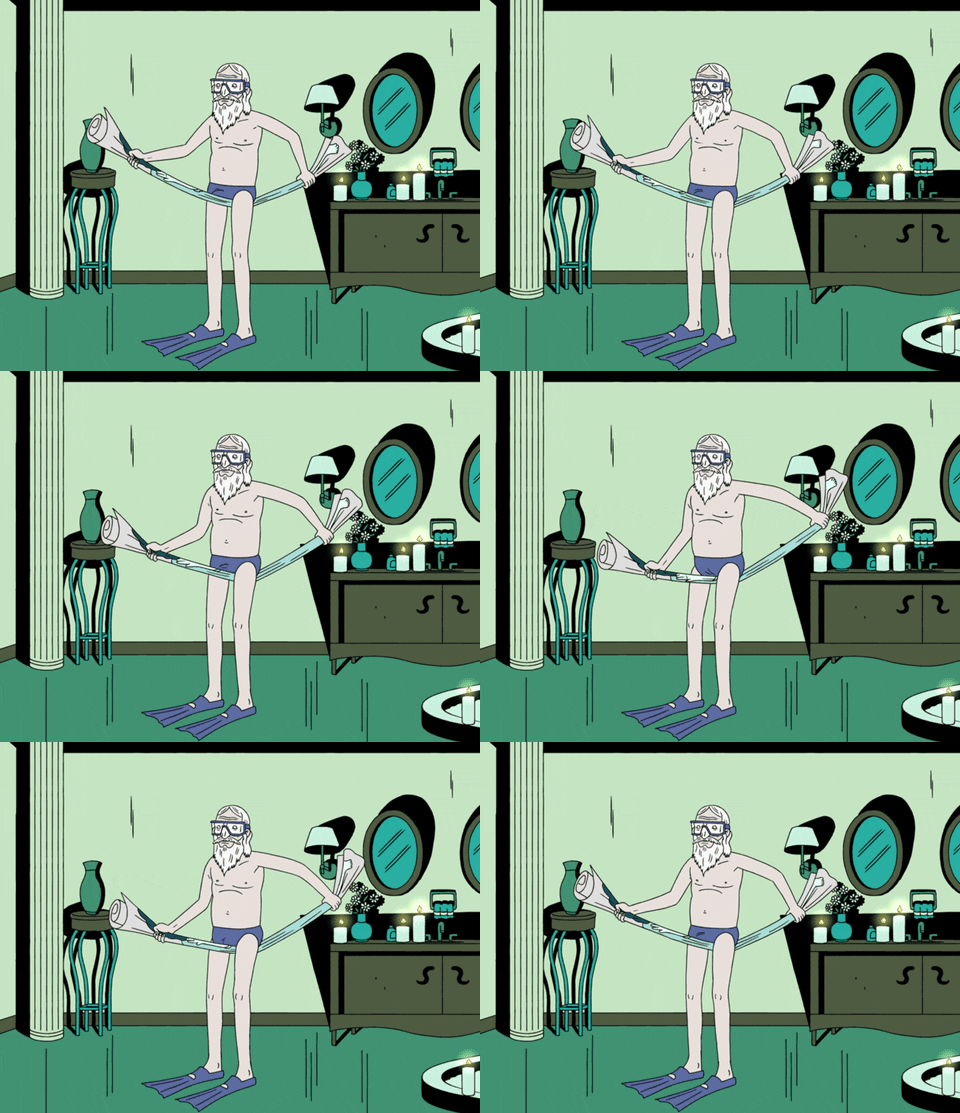 An animated towel dry. media0.giphy.com
No more wet wipes
I've personally received praise and appreciation from guests for having wet wipes in the restroom. Apparently, I have been mistreating them and myself all these years. The chemical methylisothiazolinone is often added to inhibit bacterial growth before the wipes get from the stores to your homes. Any chemicals in the wipes stay on you unless washed off. These harmful chemicals can lead to rashes from allergic reactions. "Even the all-natural ones can cause problems," says Dr. Asbury.
Purchase a bidet
Who doesn't remember bidet's flying off the shelves during the pandemic? These cute little add-ons for every toilet send a spray of water right between your butt cheeks. The system flushes out the area offering an optimal approach to the clean up. Setting up the device is quite easy as it connects to the existing plumbing of the toilet.
Lastly, water soaked paper towels
It's suggested to dampen a paper towel instead of toilet paper because TP is too flimsy and often just falls apart. We know disintegrating toilet paper creates a whole new problem. One very important note: the towel should be placed in a waste basket after use. Some may find this concept rather disgusting. However, the bill for a plumber to unclog your pipes is equally disturbing. Throw the used towels in the trash.
And there you have it; these five pro tips to cleaning up after your visit to the toilet bowl should make a world of difference for your health.
This article originally appeared in May.











 Ultrasound of human baby.Image via
  IVF animated process.Image via
  A couple speaks with a fertility professional.Image via
 Love, Mom.Photo from Heidi Johnson
  A teen boy having a hard time.



 Hands hold a digital representation of the brain.Image via
  Mother and daughter work a puzzle.Image via
  Man and woman connect under the sunshine.Image via
 The obituary paints a comic, if bleak, picture.
  A Facebook post about the obituary.
Why do some folks use social media but don't engage?
Psychologist says people who never comment on social media share these 5 positive traits
For over 20 years, social media has developed into a staple in many people’s day-to-day lives. Whether it’s to keep in communication with friends and family, following the thoughts of celebrities, or watching cat videos while sipping your morning coffee, there seem to be two types of social media users: commenters and lurkers.
The term “lurker” sounds equally mysterious and insidious, with some social media users writing them off as non-participants at best or voyeurs at worst. However, mindfulness expert Lachlan Brown believes these non-commenters have some very psychologically positive and healthy traits. Let’s take a look at how each one of these traits could be beneficial and see how fruitful lurking might be even though it can drive content creators crazy.
1. Cautious about vulnerability
Consciously or not, making a post online or commenting on one puts you and your words out there. It’s a statement that everyone can see, even if it’s as simple as clicking “like.” Doing so opens yourself up to judgment, with all the good, bad, and potential misinterpretation that comes with it. Non-commenters would rather not open themselves up to that.
These silent users are connected to a concept of self-protection by simply not engaging. By just scrolling past posts or just reading/watching them without commentary, they’re preventing themselves from any downsides of sharing an opinion such as rejection, misunderstanding, or embarrassment. They also have more control on how much of themselves they’re willing to reveal to the general public, and tend to be more open face-to-face or during one-on-one/one-on-few private chats or DMs. This can be seen as a healthy boundary and prevents unnecessary exposure.
Considering many comment sections, especially involving political topics, are meant to stir negative emotional responses to increase engagement, being extra mindful about where, when, and what you comment might not be a bad idea. They might not even take the engagement bait at all. Or if they see a friend of theirs post something vulnerable, they feel more motivated to engage with them personally one-on-one rather than use social media to publicly check in on them.
2. Analytical and reflective mindset
How many times have you gone onto Reddit, YouTube, or any other site and just skimmed past comments that are just different versions of “yes, and,” “no, but,” or “yes, but”? Or the ever insightful, formerly popular comment “First!” in a thread? These silent browsers lean against adding to such noise unless they have some valid and thoughtful contribution (if they bother to comment period).
These non-posters are likely wired on reflective thinking rather than their initial intuition. Not to say that all those who comment aren’t thoughtful, but many tend to react quickly and comment based on their initial feelings rather than absorbing the information, thinking it over, researching or testing their belief, and then posting it. For "lurkers," it could by their very nature to just do all of that and not post it at all, or share their thoughts and findings privately with a friend. All in all, it’s a preference of substance over speed.
3. High sense of self-awareness
Carried over from the first two listed traits, these silent social media users incorporate their concern over their vulnerability and their reflective mindset into digital self-awareness. They know what triggers responses out of them and what causes them to engage in impulsive behavior. It could be that they have engaged with a troll in the past and felt foolish. Or that they just felt sad after a post or got into an unnecessary argument that impacted them offline. By knowing themselves and seeing what’s being discussed, they choose to weigh their words carefully or just not participate at all. It’s a form of self-preservation through restraint.
4. Prefer to observe rather than perform
Some folks treat social media as information, entertainment, or a mix of both, and commenting can feel like they’re yelling at the TV, clapping alone in a movie theater when the credits roll, or yelling “That’s not true!” to a news anchor that will never hear them. But contrary to that, social media is a place where those yells, claps, and accusations can be seen and get a response. By its design, social media is considered by experts and the media as performative, regardless of whether it is positive or negative. Taking all of the previously mentioned traits into account, one can see why they would prefer to “observe the play” rather than get up on the stage of Facebook or X.
On top of that, these non-commenters could be using social media differently than those who choose to fully engage with it. Using this type of navigation, there may be nothing for them to comment about. Some commenters are even vying for this for their mental health. There are articles about how to better curate your social media feeds and manipulate algorithms to create a better social media experience to avoid unnecessary conflict or mentally tiring debate.
If you go on a blocking spree on all of your accounts and just follow the posters that boost you, it could turn your social media into a nice part of your routine as you mainly engage with others face-to-face or privately. In terms of commenting, if your curated Instagram is just following cute dogs and all you have to offer for a comment is “cute dog,” you might just enjoy the picture and then move on with your day rather than join in the noise. These non-commenters aren’t in the show and they’re fine with it.
5. Less motivated by social validation
The last trait that Brown showcases is that social media users who browse without posting tend to be independent from external validation, at least online. Social media is built to grow through feedback loops such as awarding likes, shares, and reposts of your content along with notifications letting you know that a new person follows you or wants to connect. This can lead many people to connect their activity on social media with their sense of self worth, especially with adolescents who are still figuring out their place in the world and have still-developing brains.
Engaging in social media via likes, shares, comments, and posts rewards our brains by having them release dopamine, which makes us feel good and can easily become addictive. For whatever reason, non-commenters don’t rely on social media as a means to gauge their social capital or self worth. This doesn’t make them better than those who do. While some non-commenters could have healthier ways to boost their self worth or release dopamine into their systems, many get that validation from equally unhealthy sources offline. That said, many non-commenters’ silence could be a display of independence and self confidence.
Whether you frequently comment online or don’t, it’s good to understand why you do or don’t. Analyzing your habits can help you determine whether your online engagement is healthy, or needs to be tweaked. With that information, you can then create a healthy social media experience that works for you.