


When Prince took the stage, anything was possible—from feral, shirtless screaming to hall-of-fame guitar solos to the kind of destructive rock-star showmanship that few others would be willing to attempt. One of his signature moves was throwing his instrument—sometimes into the air, where, on one memorable occasion, it seemed to vanish completely; other times over to a technician waiting in the wings. Many of these guitars—including his "Cloud" axe, built by Dave Russan—suffered a fair amount of abuse. "He would always throw them to the roadie at the end of the show, and they weren’t always caught, so they’d have to be repaired often," Russan told Alternative Nation. "They were hard rock maple but couldn’t always stand up to that."
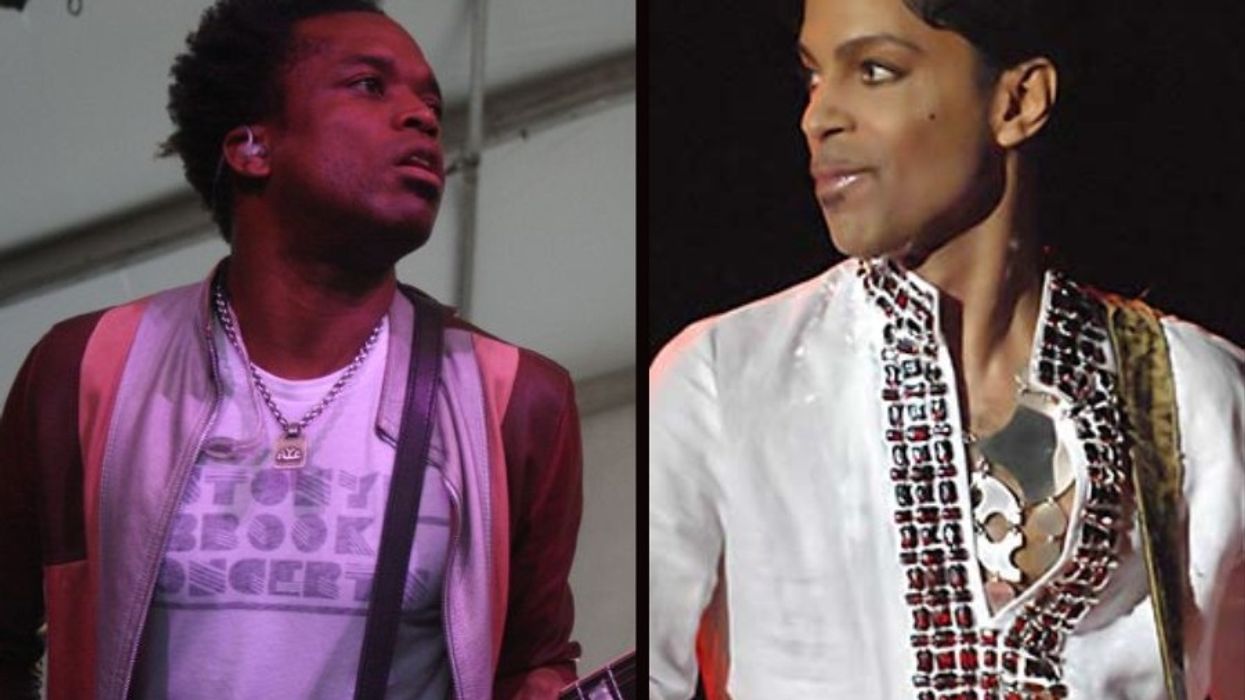
But that was Prince’s gear. Not the case in a case from 2013, when The Artist performed on Late Night with Jimmy Fallon, having borrowed a guitar from "Captain" Kirk Douglas of house band The Roots. The wild promotional spot ended with a bold toss, a broken instrument, and a supremely bummed-out musician. But the story is even weirder than you might expect, and it led to a surprisingly happy ending.
Prince destroys—in more ways than one
On taping day, Prince’s team had forgotten to bring his requested six-string, and Douglas—a huge fan of the rock/funk chameleon—was more than cool with sharing his own, a beloved 1961 Epiphone Crestwood. In fact, it's almost like the stars had aligned: "The crazy thing is the only reason that guitar was in 30 Rock [home of NBC Studios, where the show was taped] was because I was rehearsing for a Prince tribute at Carnegie Hall this week," Douglas later tweeted.
The performance itself is pure electricity. Joined by his back gin band 3rdEyeGirl, Prince brought a majestic psych-funk energy to 1979’s "Bambi," concluding with a wah-wah-heavy solo on the Crestwood. Afterward, he tossed the guitar into the heavens and confidently stomped backstage as it crashed to the floor, spurting feedback through the room. A giggling Fallon walked up to plug Prince’s latest single, and the camera briefly cut over to The Roots, including a somewhat confused-looking Douglas, as they played the show’s theme song.
- YouTube www.youtube.com
"Completely crestfallen"
"And at the end of the song, he lifts the guitar up, and I think he’s about to play behind his head, but he’s not playing behind his head," Douglas reflected in a 2020 video on The Roots’ YouTube channel. "He lifts the guitar up and throws it in the air, and it comes crashing down to the ground, and it’s squealing in feedback. And he just struts off the stage. I was completely crestfallen, and I knew that there were cameras on me, and I knew there was nothing I could do about it, and I just had to sit there and be in it. I remember looking to my right, and Mark Kelley, our bass player, was laughing hysterically."
Naturally, Douglas was devastated—at least at first. "I went through some complicated emotions in that very moment," he recalled to Consequence of Sound in 2019. "Initially it was kind of negative. After it happened, I had my guitar in pieces. I went to Prince, and I was like, 'Hey, you broke the guitar. If you don't mind, could you sign it at least?' And he was like, 'Oh, I haven't signed anything since the '70s.'" After assessing the immediate damage, he tweeted a photo of the guitar with the caption, "Purple Pain…Maybe it's because I'm a dad," he added, "but I think framing the guitar is a little like rewarding bad behavior."
Silver linings
Prince eventually apologized for the ill-fated toss and arranged to have the guitar fixed. Plus, there were multiple silver linings to the heartbreak. As the guitarist told CoS, he wound up connecting with other music heroes, including Jackson Browne and Elvis Costello. And through conversations elsewhere (including one with Chris Rock), he realized he wasn’t the only one with a bizarre Prince story: "I feel like I'm part of this club of people who've been wronged by him," he said. "For all I know, he could have just even known, in all of his genius, like, 'Watch, I'm gonna hook this kid up. I'm gonna break his guitar so he can have this story and talk about it for the rest of his life.' If that was his thought, he would not be wrong about that."
He even ended up writing a song about it: "Little Friend," which he released on his debut solo album, 2019’s Turbulent Times. "'[It] was actually composed on the guitar I purchased with the money left over from the repair of the guitar he actually broke," he told Rolling Stone. "I recorded the song with the Crestwood. The lyric comes from the emotion of the moment of that time where I was upset, but in retrospect it’s one of the coolest things that has ever happened to me. He’s probably looking down, saying, 'I made your old-ass guitar way more interesting, paid you for your troubles, and gave you something cool to write about…You're welcome."
In the Roots YouTube video, Douglas rightly called the tale "one of the greatest guitar stories ever told," noting that the instrument had since been displayed at the Rock and Roll Hall of Fame’s as part of the "Plat It Loud" exhibit. "That guitar is bigger than me," he said. "But I’m so happy to have played a part in what’s now widely regarded as rock and roll history."
- YouTube www.youtube.com








 An elderly man walks down an icy roadCanva
  An elderly man grilling at a partyCanva
 Two people enjoying a walk through the woods
 A woman pets her dogCanva
  A woman stands in front of a window listening to musicCanva
 A group of people sit around a circle talkingCanva
 A woman sleeping in bedCanva
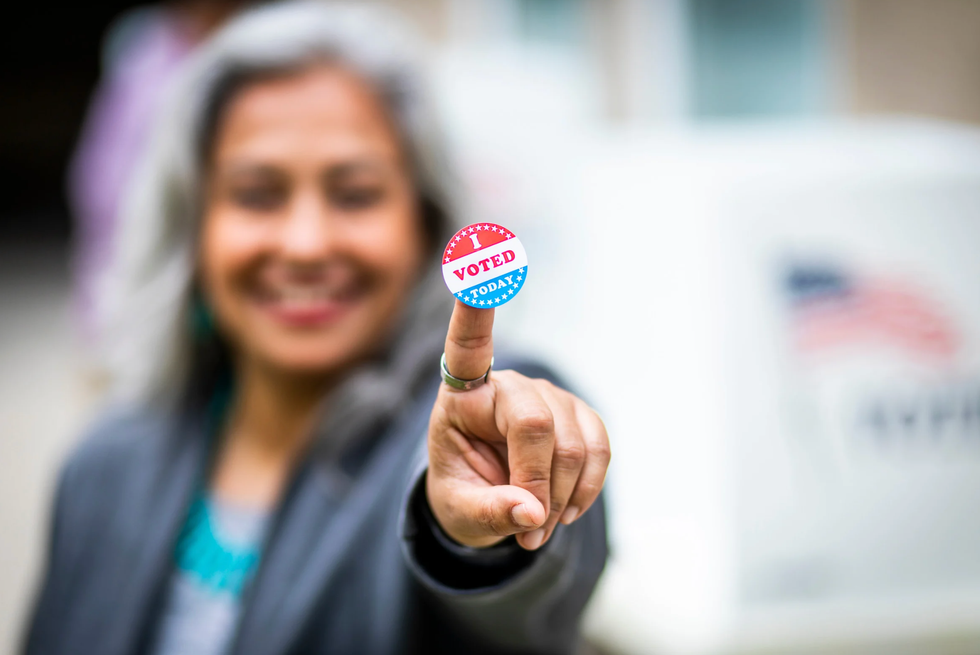 Woman proudly displays an "I Voted" stickerCanva
 A woman's ear with multiple piercingsCanva
 A woman takes a bit out of a huge strawberry cakeCanva
 The back of a woman's head with silver hair. Canva
 A woman watches the sunset from her carCanva
 A nurse holds a clipboard in a hospital hallwayCanva
 A heavily-tattooed woman holds a mug of coffeeCanva
 Stressed out man at workCanva
 Stressed employee takes a break from workCanva
 Overhead shot of three employees sharing a deskCanva
 A pile of cashCanva
 A pregnant woman clutches her bellyCanva
 An eviction noticeCanva
 Supportive Reddit comment Reddit |
  A gavel rests in front of a judgeCanva
 Victoria Claflin Woodhull, the first woman to run for president of the United States in 1872rce Harvard Art Museum/Fogg Museum, Historical Photographs and Special Visual Collections Department, Fine Arts Library via
 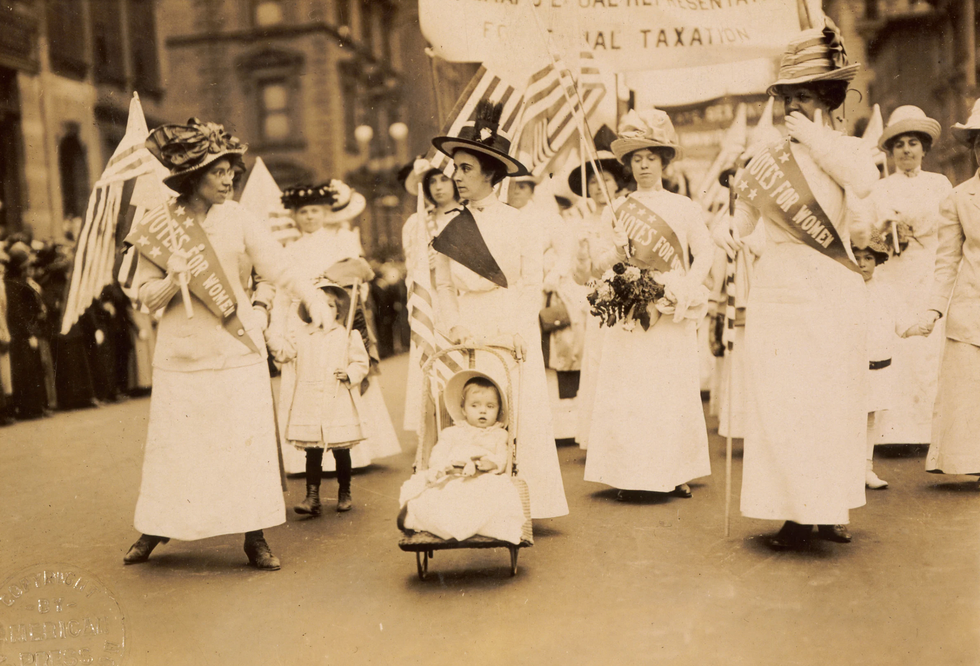 Suffragists matching for women's right to vote in the early 20th centuryCanva
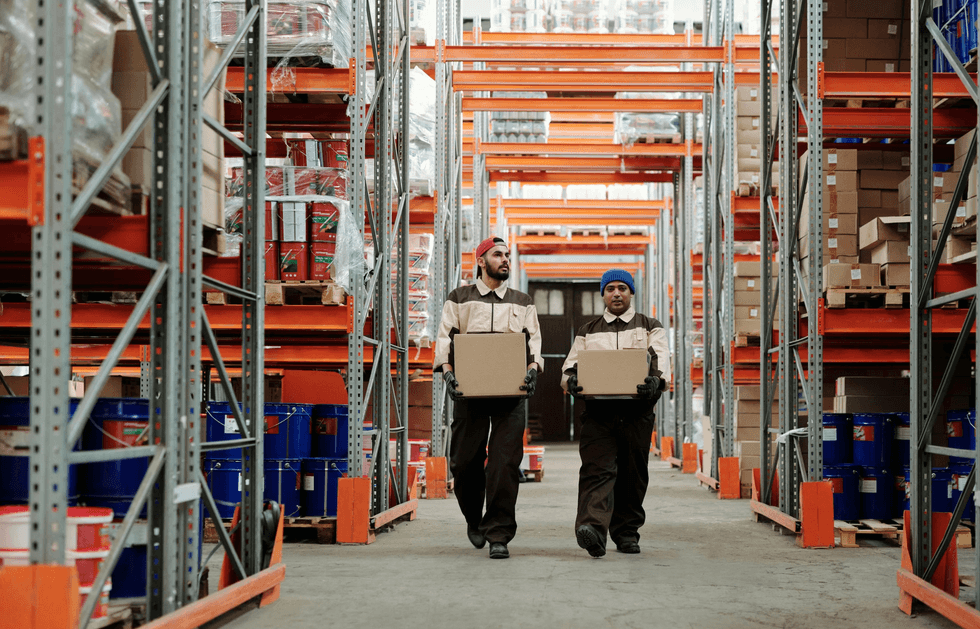 Amazon fulfillment centerCanva
 A worker transports a heavy boxCanva
Female shopper looking for help
21 products that are gaslighting us into thinking they’re essential when they’re not
Some things in life are actually necessary—clean water, decent healthcare, basic human decency. But then there are the things that feel like they’re gaslighting us. The things we’re told we can’t live without, even though we survived just fine before they existed. Things like "smart" fridges, lawn fertilizer services, and yes—whole body deodorant.
Recently, our sister-site Upworthy asked their Facebook audience the question: What's a product or service that feels like it's gaslighting all of us into thinking it's necessary? More than 8,000 responses poured in. The answers were passionate, funny, and surprisingly unified.
Here are 21 products, services, and systems people called out for pretending to be essential—when they might actually be optional, overpriced, or flat-out invented.
1. Whole body deodorant
"Take a shower," said Shannon H.
“How did we ever manage all those years without it!! 😂😵💫” added Karen R.
Others noted it may help people with medical conditions—but for the average person, it's definitely a marketing creation.
2. Health insurance
It topped the list. Erica L. explained: “My doctor prescribes, the pharmacist issues meds, nurses care for people, surgeons do surgery—Health Insurance stands between health care and patients and says no, exclusively on whether they think it’s financially effective to treat you.”
Important note: Health insurance can provide life-saving access for many—but what people are frustrated by here is the profit-first system, not care itself.
3. The wedding industry
Multiple people slammed the high cost of modern weddings.
JoElla B. put it plainly: “We spend too much time and money planning one day, and not enough thought on how to blend two lives in a mutually beneficial one.”
Others called out expensive dresses, venues, and pressure to perform for social media.
4. Bottled water
Carole D. said: “Water in plastic bottles! Get a cup!”
While bottled water has value in emergencies, it’s often just filtered tap water—sold for profit in plastic.
5. Baby product overload
“Most baby products,” wrote Kelli O. “They really aren’t as needy and complicated as companies want us to think.”
6. Fabric softener
“It’s bad for clothes, bad for the Earth, bad for the wallet, and totally unnecessary,” said Gail H.
Some experts agree—many softeners contain chemicals that can reduce fabric lifespan and irritate skin.
7. Smart appliances
“Adding ‘phone controls’ to every appliance instead of making them last as long as they used to,” wrote Sherry S.
When your fridge needs a software update, something’s gone off the rails.
8. Makeup and anti-aging products
“Anything anti-aging,” said Melissa T., “Please just let me age into the gargoyle I was meant to become.”
Others questioned products designed to “fix” eyelashes, eyebrows, pores, and graying hair.
April S. added, “Products that women are convinced they MUST have in order to be ‘beautiful’ and therefore ‘loved.’”
9. Cosmetic surgery
Ron P. called out the industry as a whole. And while body autonomy matters, many commenters questioned whether insecurities are being commodified and sold back to us.
10. Ticketmaster and “convenience fees”
“Let’s go back to waiting in line at a record store,” wrote Nicole C.
Zaida B. added: “Convenience fee for online purchases—then charging $10 more at the actual event.”
11. Engagement rings
James P. didn’t mince words: “Engagement rings.”
The diamond industry has long been criticized for manufactured scarcity and marketing-fueled necessity.
12. Lawn chemicals and services
“Plant native grasses and you don’t have the pests or need for constant watering,” wrote Jamie B.
Environmental groups have raised similar concerns over runoff and unnecessary pesticide use.
13. AI and generative tech
“This stuff squeezes the lifeblood and individuality out of the human experience,” said Teresa L.
Saskia D. and others echoed skepticism about its necessity, even as many of us are being pushed to use it.
14. Funeral services
Amy W. shared: “My parents both have already paid to have themselves cremated and are very adamant that they do not want anything big done for them. In their words, ‘I won’t care, I’m dead.’”
Of course, some families find comfort in tradition—but the cost and pressure can feel overwhelming and predatory.
15. Rinse and repeat
Amy D. nailed it: “It’s just to sell more. Not even sure you need it at all.”
16. Credit Card Surcharges
Shawn S. took aim at the extra fees popping up at checkout: “That is the cost of doing business and shouldn’t be the burden of the purchaser.”
Many questioned why customers are increasingly being asked to pay extra simply for the convenience of using a card.
17. Constant phone upgrades
“Apple are notorious for releasing the same shit every year,” said Steph S.
Diana H. added, “Needing to upgrade our phones so frequently.”
Built-in obsolescence and marketing cycles drive most of the demand.
18. Vitamins and supplements
“If I took every supplement they say I NEED I wouldn’t need food. Nor could I afford it,” said Tausha L.
19. Fake pockets on women’s pants
Jessica W. said, “I have to buy men’s pants for work because women’s pants would just get torn up too fast!”
Form over function, and then they charge more for it.
20. Disposable everything
“The ‘convenience’ of disposable everything,” said Rick R.
It’s killing the planet—and draining wallets.
21. Tipping
“I’m sick of supplementing for corporations that refuse to pay a living wage,” wrote Susan V.
Tipping culture has evolved into something far removed from its original intent, and for many, it now feels like a burden shifted onto the customer.
The bigger picture
People aren’t saying all these things should vanish tomorrow. But when we start seeing convenience sold as necessity, and insecurity turned into billion-dollar markets, it's worth asking: who benefits from all of this?
And more importantly—who pays?
This article originally appeared earlier this year.