






When you look at the pristine and still turquoise waters of Lake Michigan, it's hard to imagine it has endured changes that took place over a period of 15,000 years since its formation. Recently, the enigmatic lake revealed yet another bizarre secret that stumped researchers, who found “40 giant craters” beneath its depths. However, they haven't been able to completely solve the lake's mystery yet, reported Live Science.
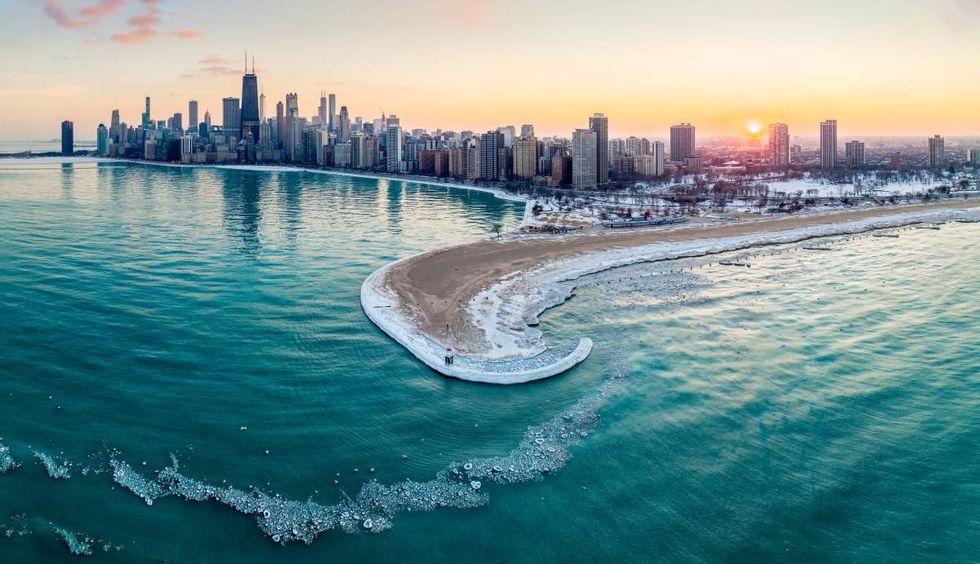 Representative Image Source: Aerial view of North Avenue Beach and Lake Michigan at Sunset, Chicago, Illinois, USA (Getty Images)
These craters were first spotted by researchers in 2022 using sonar, but they thought that these were just “strange circles.” They were mapping the lakebed inside the Wisconsin Shipwreck Coast National Marine Sanctuary, a protected area of Lake Michigan that contains 36 known shipwrecks. Russ Green, a maritime archaeologist and researcher involved in this mapping project, told Live Science, that these unusual circles looked more natural than human-made. These depressions ranged from 91 meters (300 feet) to 183 meters (600 feet) across.
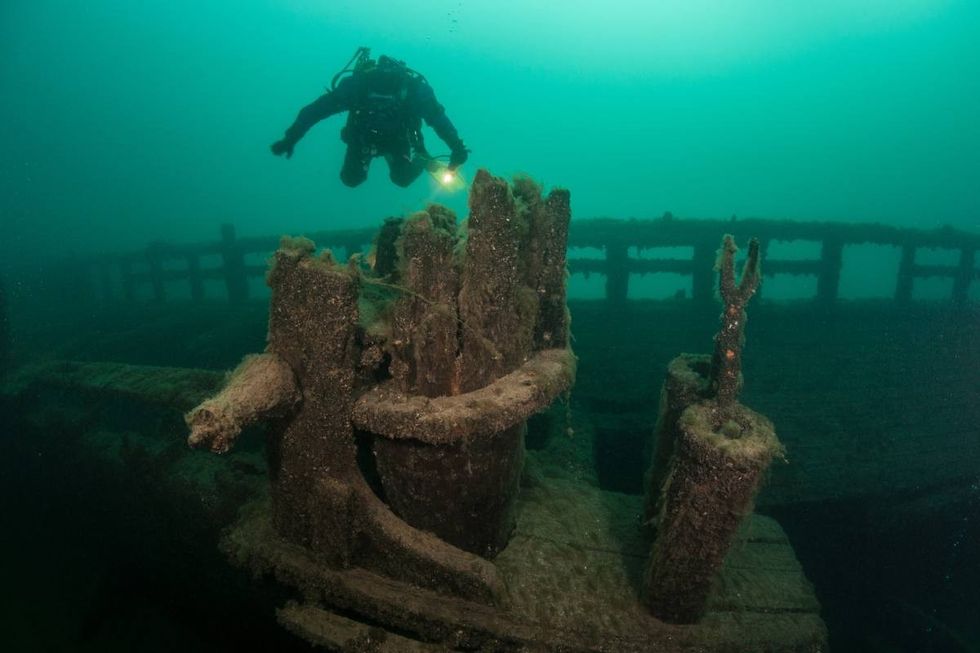 Representative Image Source: A scuba diver explores an old, wooden shipwreck in Lake Michigan. The waters of the Great Lakes are so cold that they preserve the many wrecks on bottom. (Getty Images)
While the mapping was being conducted, a shipwreck hunter named Brendon Baillod spotted the same circular formations at the bottom of the lake. "There were dozens of them in our search grid," Brendon told Live Science. "Most were 500 to 1,000 feet [152 to 309 meters] in diameter and of irregular shapes." Eventually, Green and Brendon joined hands and contacted scientists at the National Oceanic and Atmospheric Administration's (NOAA) Great Lakes Environmental Research Laboratory (GLERL) to investigate these further.
In 2024, after an elaborate investigation was carried out in a joint expedition using a remotely operated vehicle, the team confirmed that these circles are “naturally occurring craters.” Steve Ruberg, a researcher at GLERL, told the Milwaukee Journal Sentinel, that, till now they have discovered 40 craters like these, but more are likely to be found. “The craters were like "perfect, little circles" on the lakebed about 14 miles southeast of Sheboygan, Wisconsin,” Ruberg said.
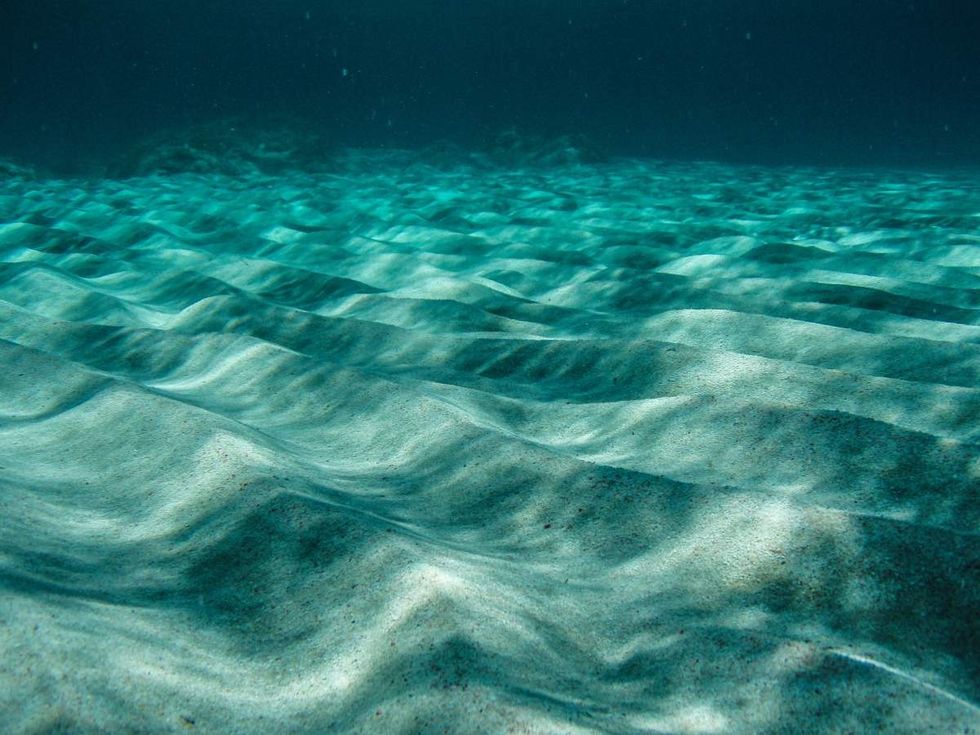 Representative Image Source: Blue sand mountens (Getty Images)
Like Lake Huron’s episode, where similar depressions were declared as “sinkholes,” the circles uncovered on Lake Michigan’s floor are likely to be sinkholes too. According to the US Geological Survey, sinkholes are regions where the types of rock below the land's surface can naturally be dissolved by groundwater circulating through them. Soluble rocks include salt beds and domes, gypsum, limestone, and other carbonate rocks. “Lake Michigan partly sits on limestone, which is prone to dissolution, so it's likely that the craters on the lakebed are also sinkholes,” Ruberg said.
 Representative Image Source: Under water Ocean - Seabed With Sunbeam (Getty Images)
Others are still scratching their heads wondering what these mysterious craters are and how they were formed in the first place. “There’s now a geological question in mind. How did they form? Why are they there, specifically in the bedrock?” Wisconsin Maritime Museum Director Kevin Cullen told TMJ4 News. “We’re all scratching our heads wondering, what could these things be?” Cullen also pondered the possibility that these holes could be connected to the underwater gorges formed by glaciers centuries ago.
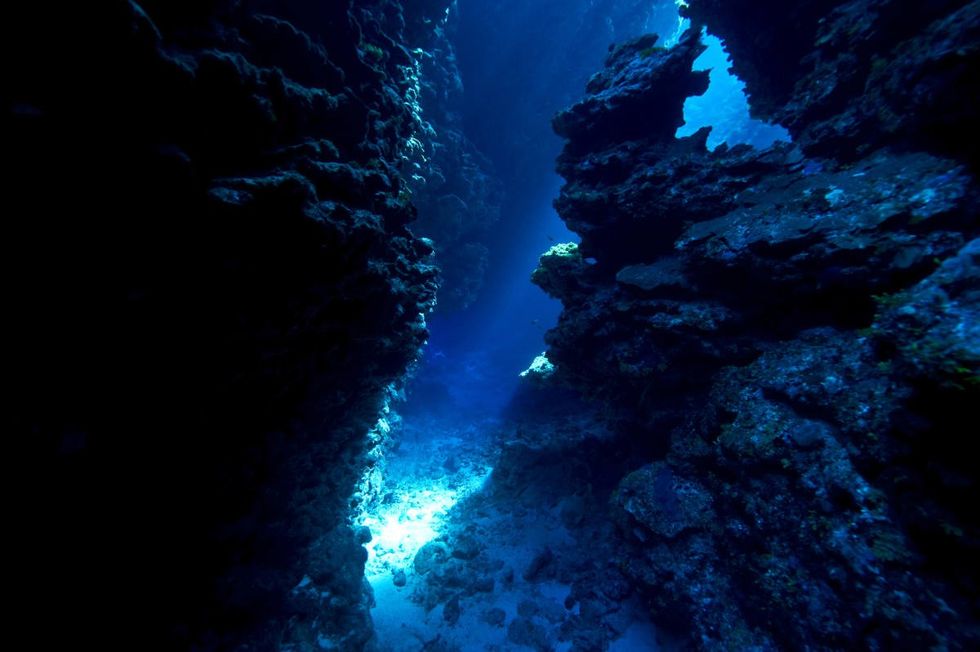 Representative Image Source: Kokod Point, Ringgold Atolls, Pacific Ocean, Fiji Islands. (Getty Images)
However, Brendon is reluctant to call these circles sinkholes or gorges. "I think they might be more accurately called craters, which have formed in the deep bottom sediment due either to water upwelling from below or trapped hydrocarbon off-gassing," he told Live Science. Ruberg added that he expects researchers to examine the craters using high-quality images and videos.
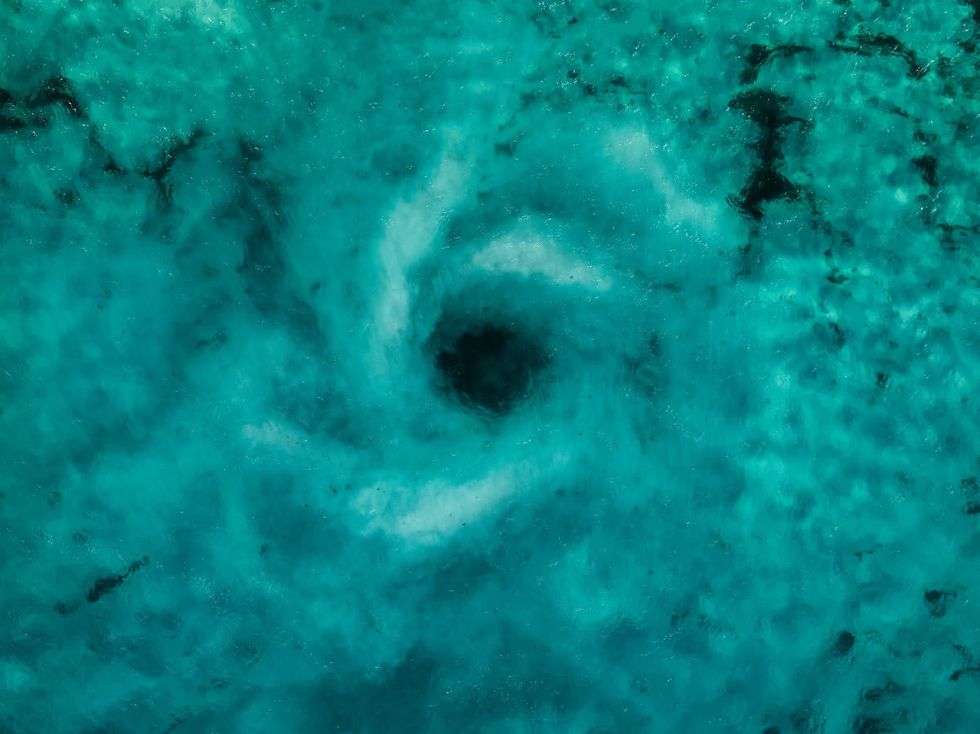 Representative Image Source: Drone image looking down on a vortex of water in the Southern Ocean, Esperance, Western Australia, Australia (Getty Images)
According to Ruberg, “freshwater shrimp, small fish, and invasive quagga mussels "doing their thing in the dark down there.” This could provide another clue to what these mysterious formations are and what kind of environments they host. Researchers, however, are planning to investigate these further, to unravel the entire backstory. "We'll be exploring them for years to come to learn more, and sort out how they got there and what role they play in Lake Michigan's ecosystem."











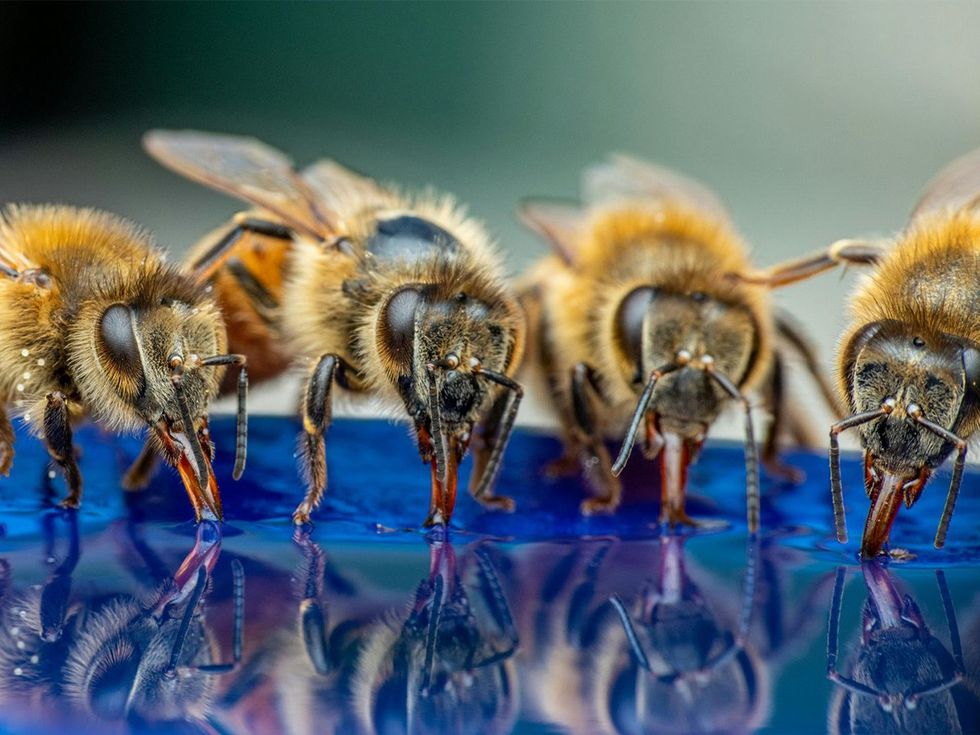 Bees feeding on food source.Image via
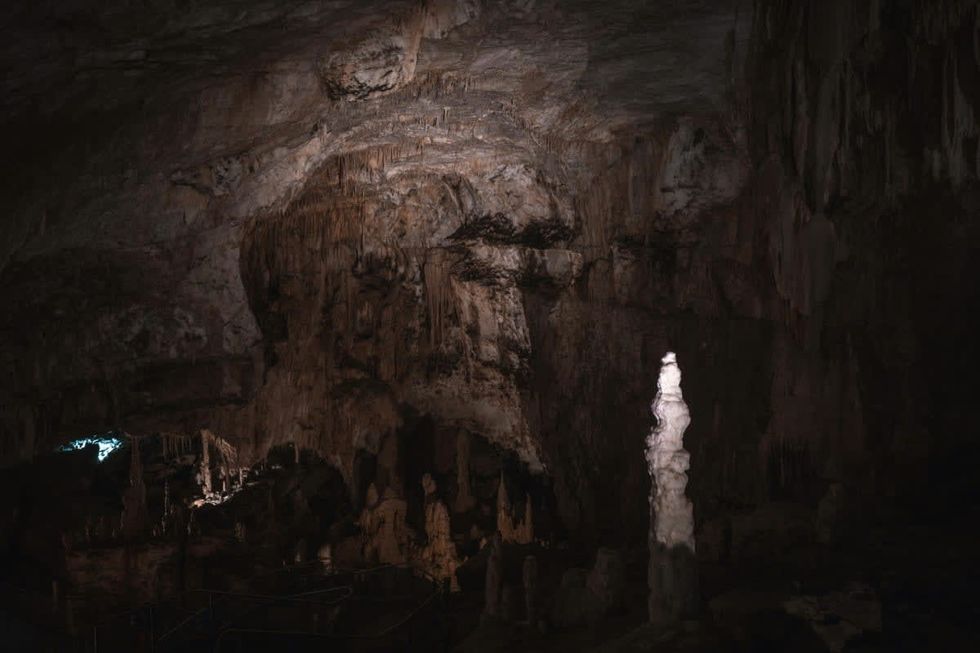 In the depths...Pexels | francesco ungaro
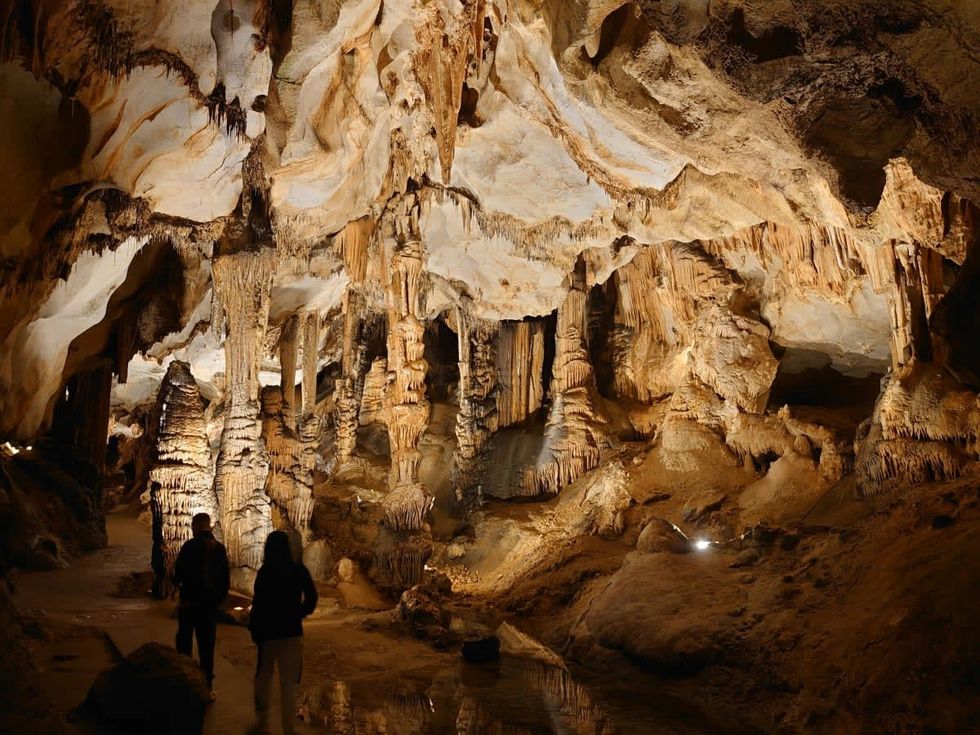 Hope the lights stay on. Pexels | parfait fongang
 "That was beyond crazy..." YouTube |
  "This is the stuff of my nightmares..."YouTube |
  "Totally blown away..." YouTube |
 A representative Image of The Atlantic Ocean. Source: Pexels | Kellie Churchman
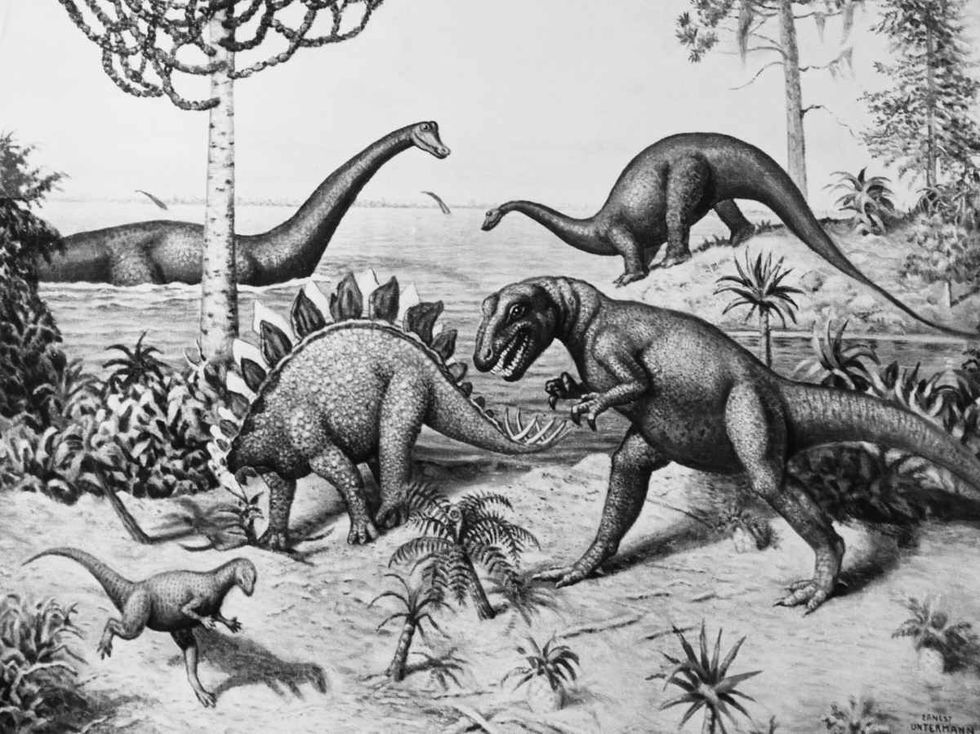 Representative Image Source: Painting from a series by Ernest Untermann in the museum at Dinosaur National Monument, Utah.
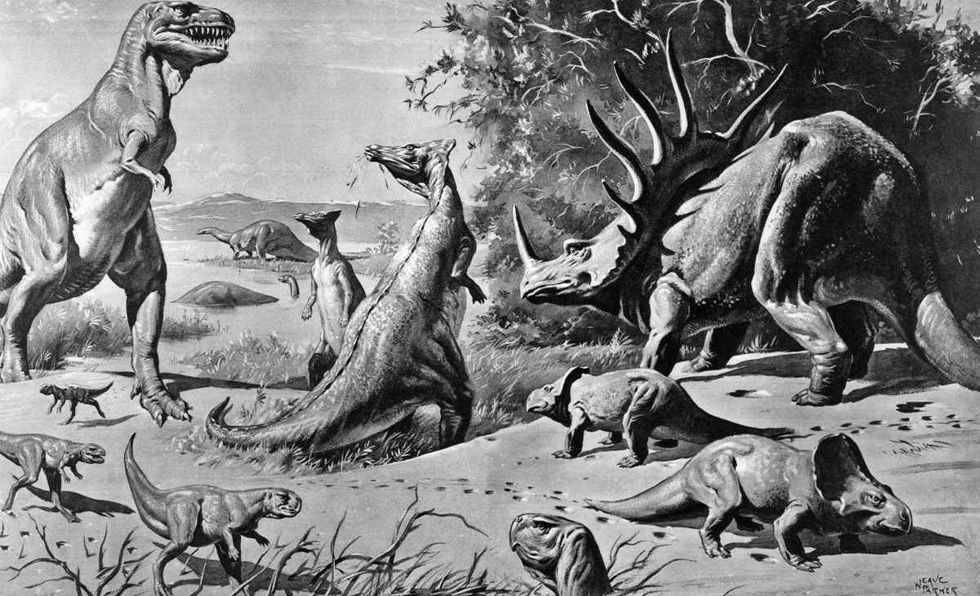 Representative Image Source: VARIOUS DINOSAURS IN GOBI DESERT. Photo by H. Armstrong Roberts/ClassicStock/Getty Images
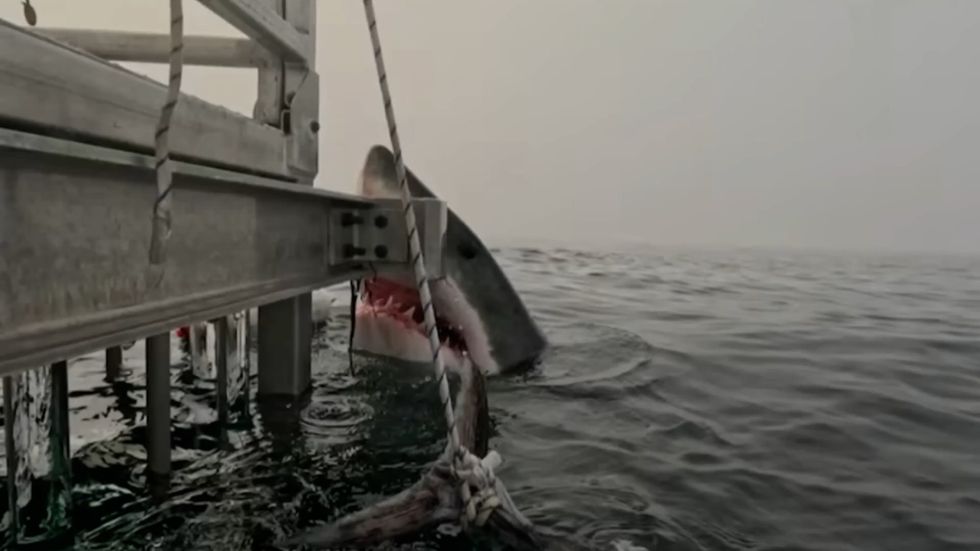 Great white shark pokes its head above water.Image pulled from YouTube video - Photo taken by Geraldine Fernandez
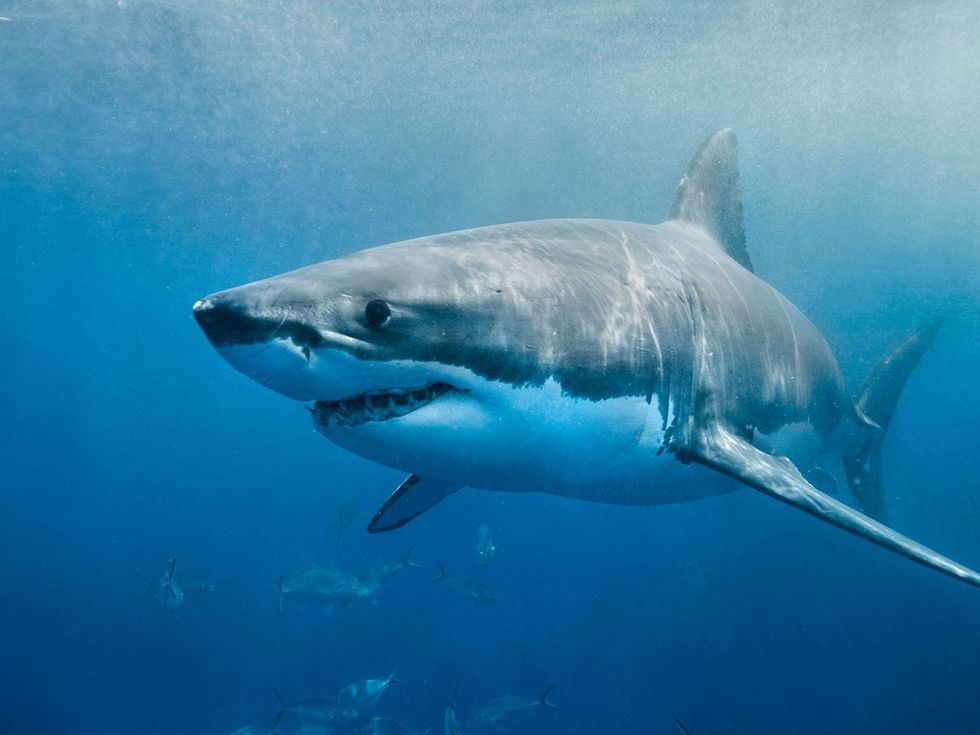 Great white shark swims in the ocean.Image via Canva - Photo by lindsay_imagery
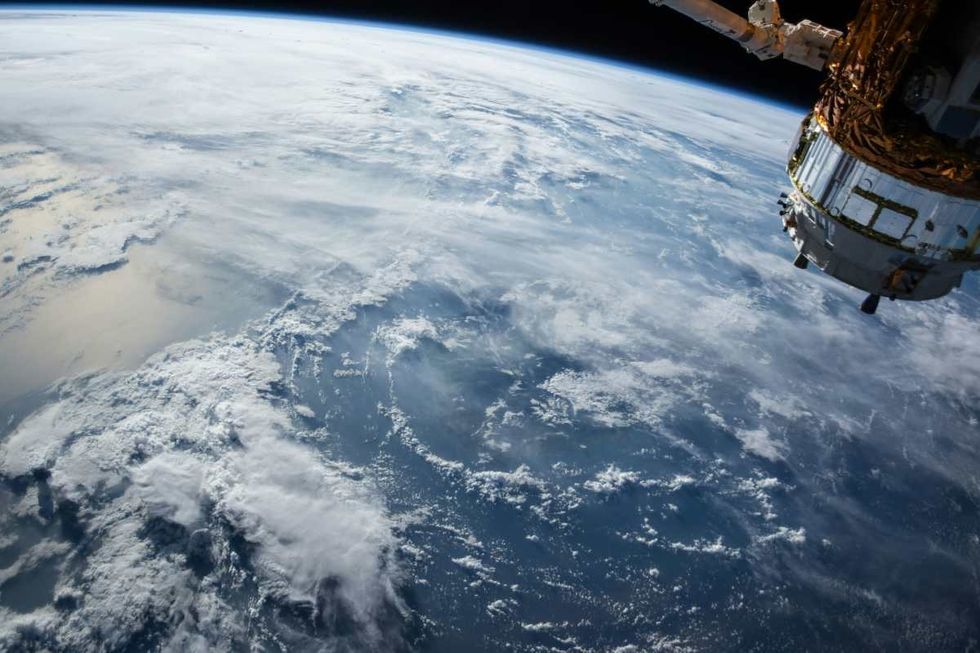 Representative Image Source: Unsplash | NASA
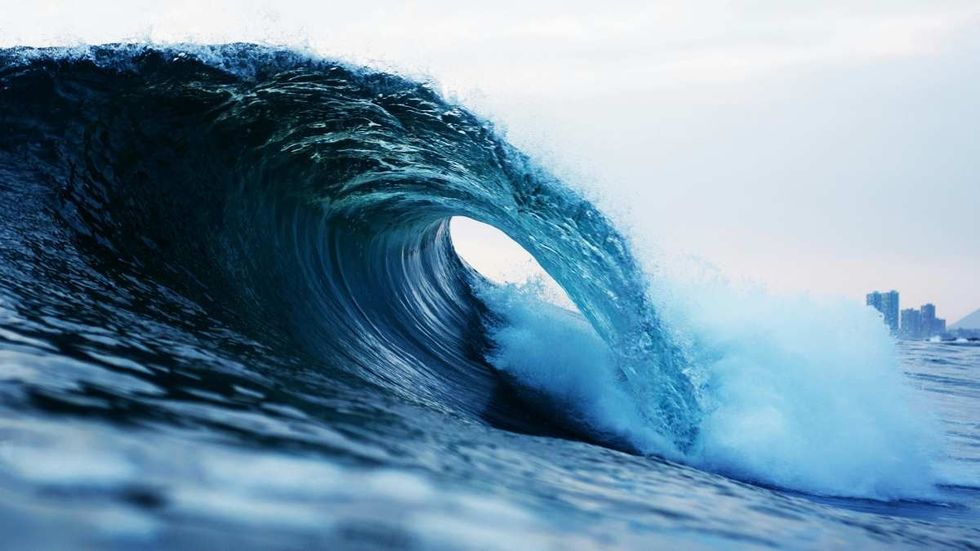 Representative Image Source: Pexels | Earano
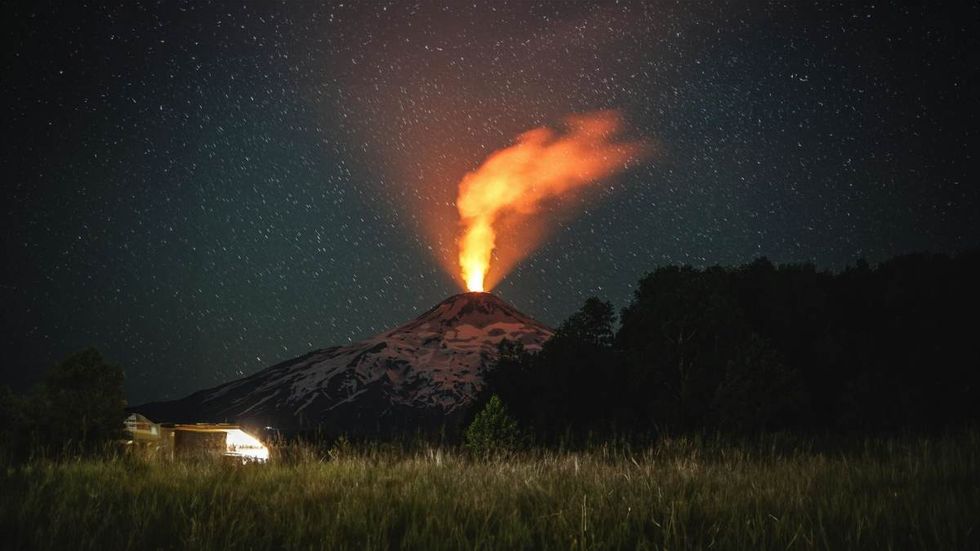 Representative Image Source: Pexels | Mauro Ignacio Torres
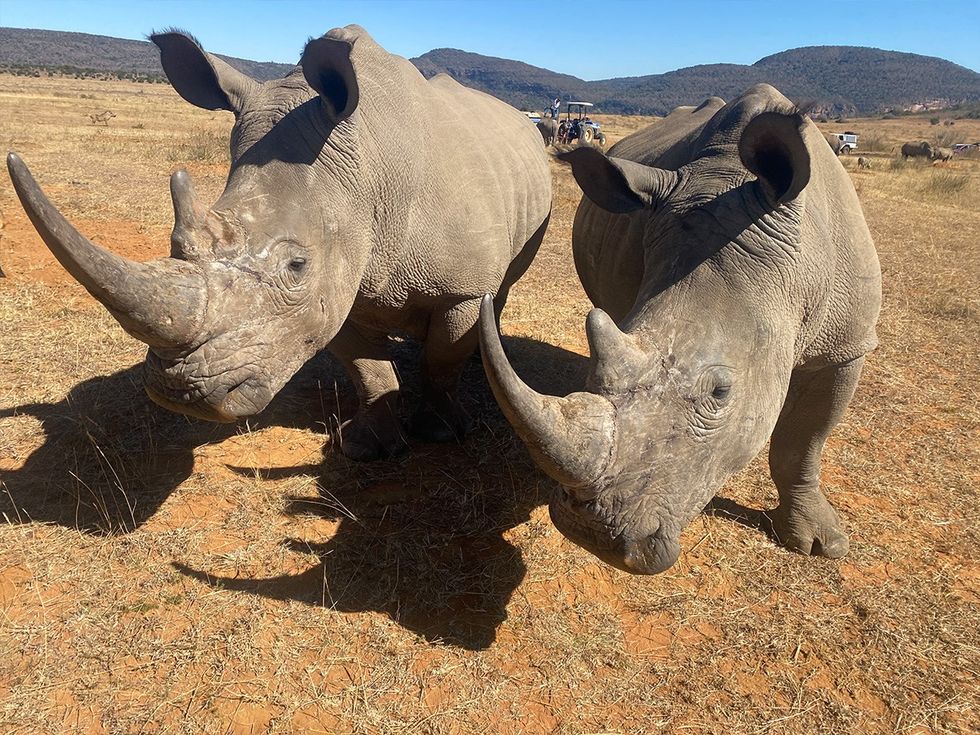 Two rhinos i the Waterberg Mountains of South Africa.Image via IAEA
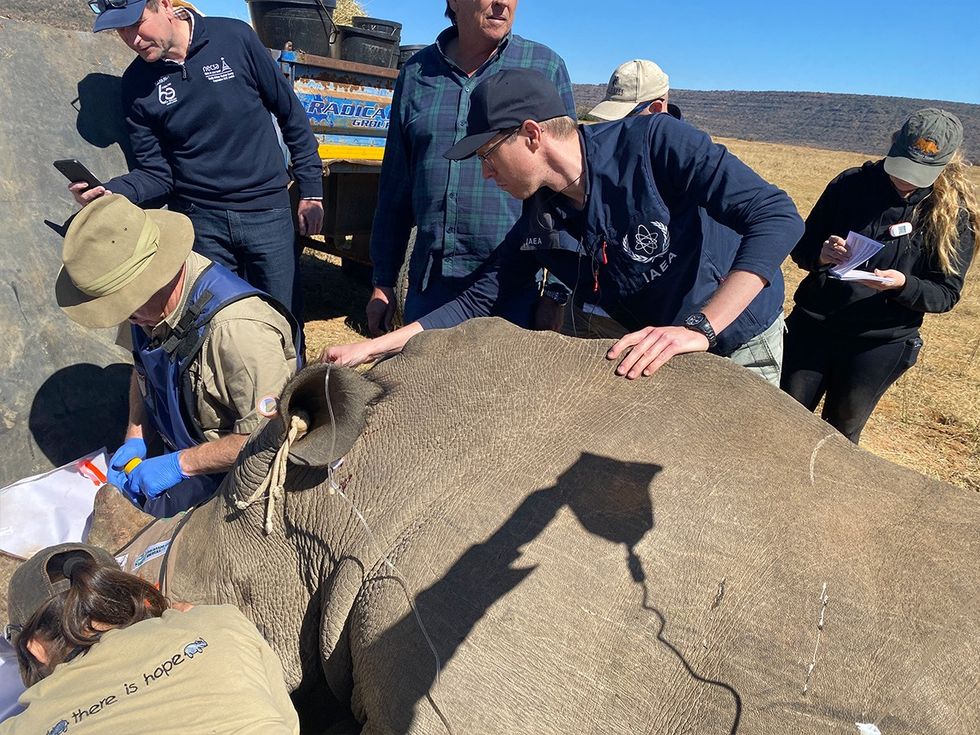 Isotope injection of rhino at the Rhino Orphanage in South Africa.Image via IAEA
 Climate change around the world.Image via Canva - Photo by piyaset
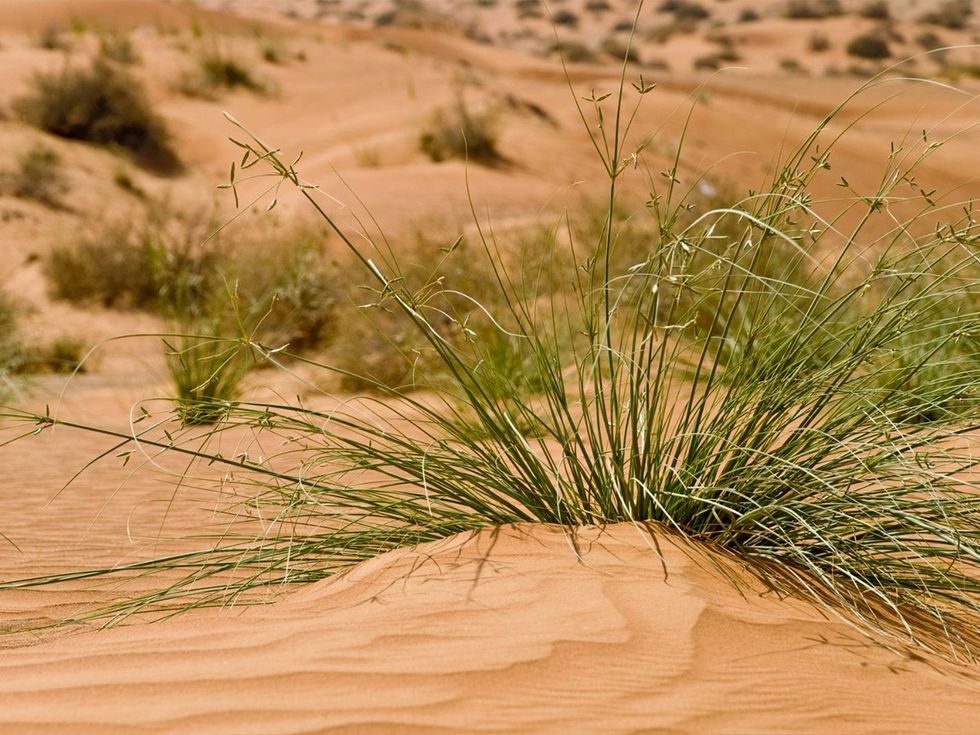 Desert grass.Image via Canva - Photo by clearandtransparent
 Hands hold a tree in digital globe.Image via Canva - Photo by Peach_iStock
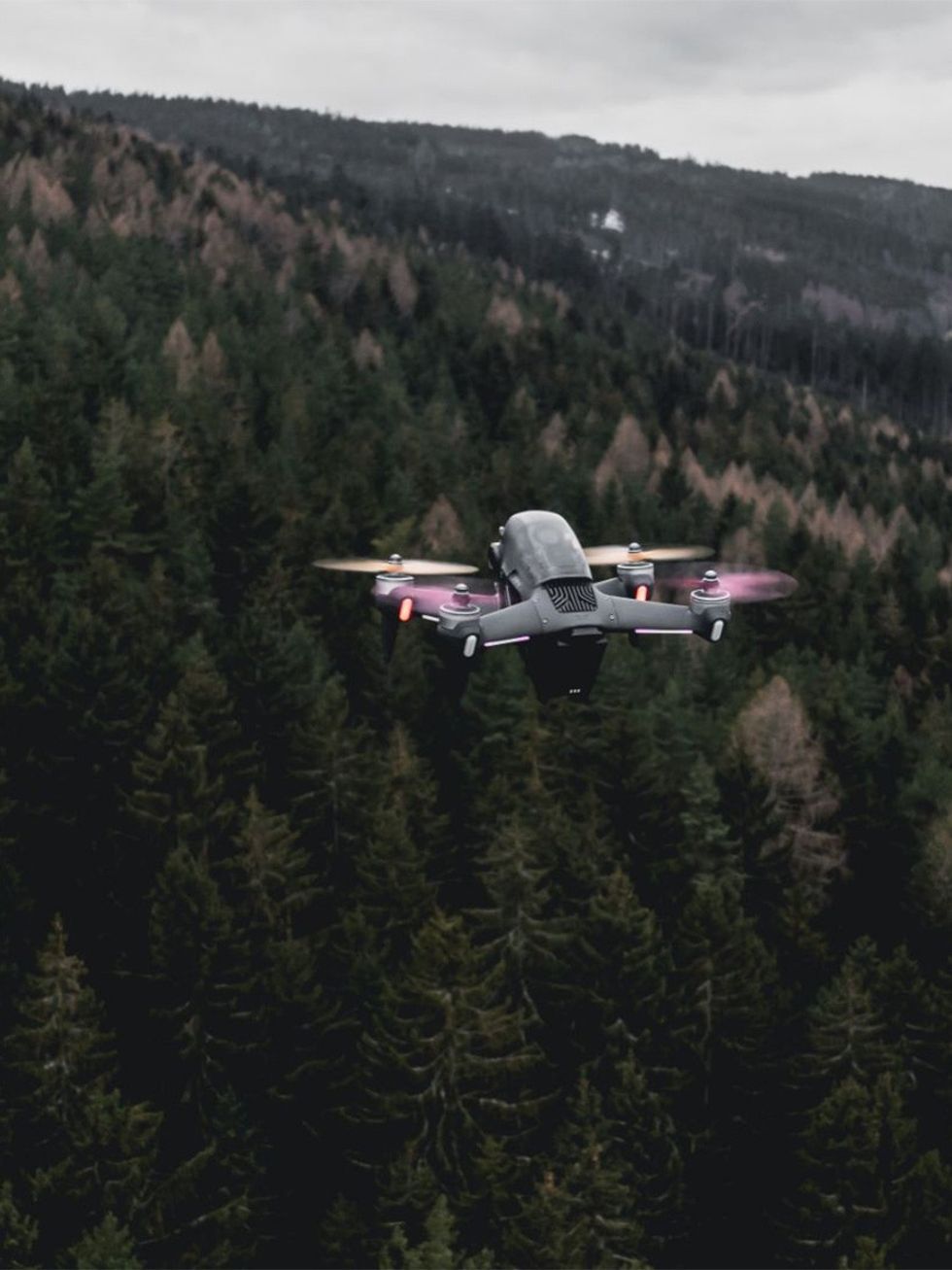 Drone over forest.Image via Canva - Photo by Justin Wolfert
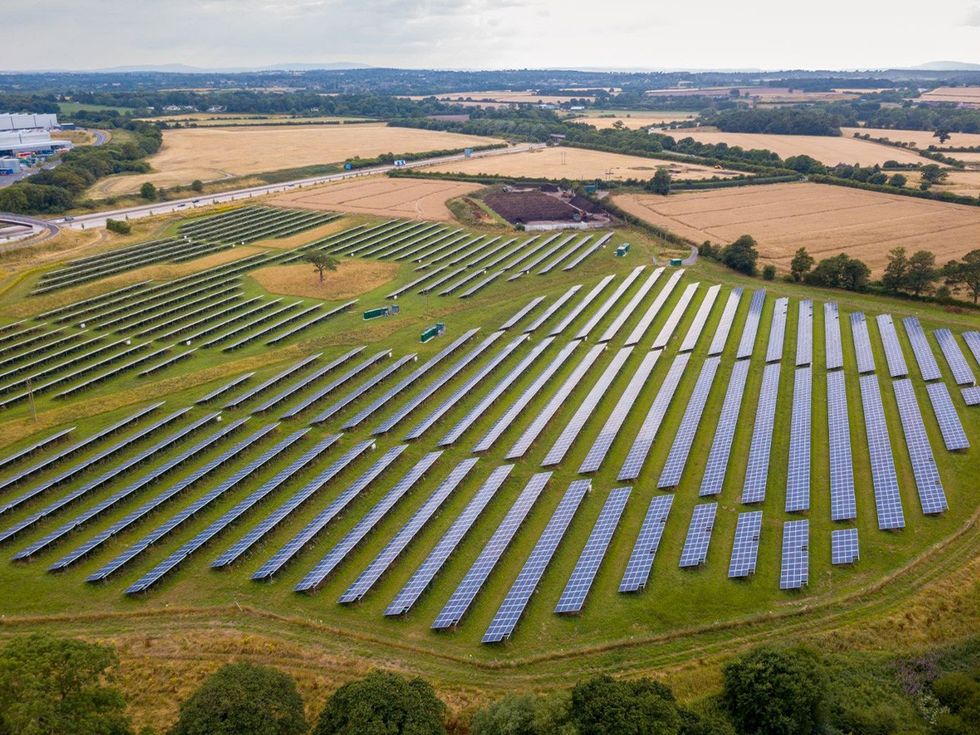 Solar power farm.Image via Canva - Photo by leonard78uk
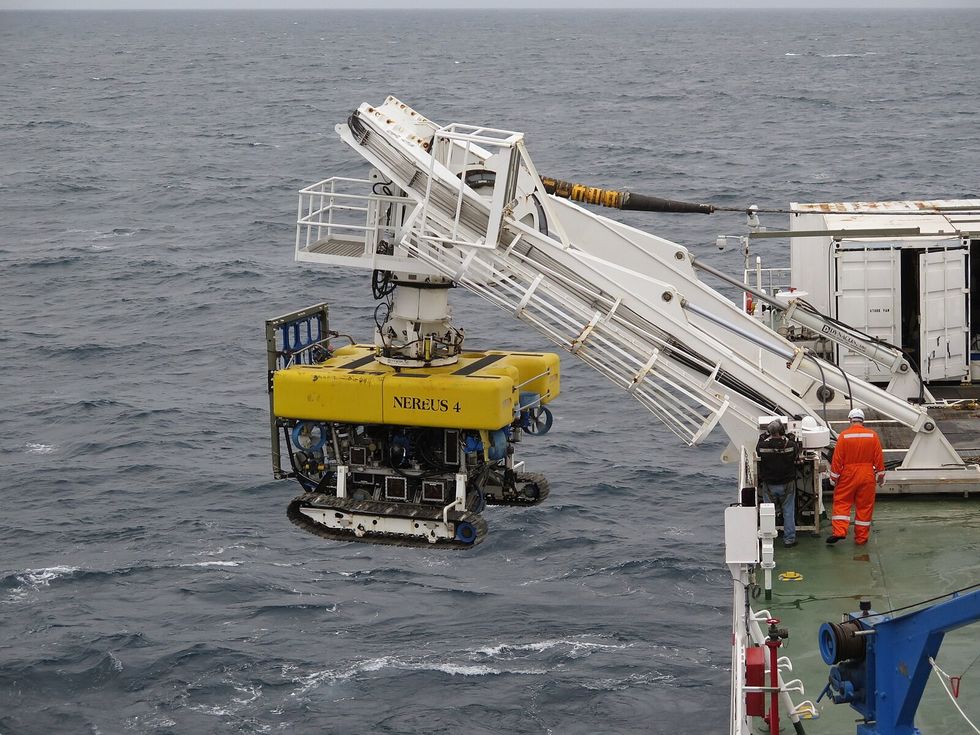 Launching the underwater robot from the CS Responder.Image via Wikimedia Commons under the Creative Commons