



ProPublica is a nonprofit newsroom that investigates abuses of power. Sign up to receive our biggest stories as soon as they're published.
This article was produced in partnership with the MLK50: Justice Through Journalism, a member of the ProPublica Local Reporting Network.
MEMPHIS, Tenn. — On Aug. 20, 2018, the first day of a federal police surveillance trial, I discovered that the Memphis Police Department was spying on me.
The ACLU of Tennessee had sued the MPD, alleging that the department was in violation of a 1978 consent decree barring surveillance of residents for political purposes.
I'm pretty sure I wore my pink gingham jacket — it's my summer go-to when I want to look professional. I know I sat on the right side of the courtroom, not far from a former colleague at the city's daily newspaper. I'd long suspected that I was on law enforcement's radar, simply because my work tends to center on the most marginalized communities, not institutions with the most power.
One of the first witnesses called to the stand: Sgt. Timothy Reynolds, who is white. To get intel on activists and organizers, including those in the Black Lives Matter movement, he'd posed on Facebook as a "man of color," befriending people and trying to infiltrate closed circles.
Projected onto a giant screen in the courtroom was a screenshot of people Reynolds followed on Facebook.
My head was bent as I wrote in my reporter's notebook. "What does this entry indicate?" ACLU attorney Amanda Strickland Floyd asked.
"I was following Wendi Thomas," Reynolds replied. "Wendi C. Thomas."
I sat up.
"And who is Wendi Thomas?" Floyd asked.
She, he replied, used to write for The Commercial Appeal. In 2014, I left the paper after being a columnist for 11 years.
It's been more than a year since a judge ruled against the city, and I've never gotten a clear answer on why the MPD was monitoring me. Law enforcement also was keeping tabs on three other journalists whose names came out during the trial. Reynolds testified he used the fake account to monitor protest activity and follow current events connected to Black Lives Matter.
My sin, as best I can figure, was having good sources who were local organizers and activists, including some of the original plaintiffs in the ACLU's lawsuit against the city.
In the days since cellphone video captured white Minneapolis police officer Derek Chauvin squeezing the life out of George Floyd, a black man, residents in dozens of cities across the country have exercised their First Amendment rights to protest police brutality.
Here in Memphis, where two-thirds of the population is black and 1 in 4 lives below the poverty line, demonstrators have chanted, "No justice, no peace, no racist police!"
The most recent protests were sparked by the killings of Floyd and of Breonna Taylor, a black woman gunned down in her home by Louisville, Kentucky, police in March. But in Memphis, like elsewhere, the seeds of distrust between activists and police were planted decades ago. And law enforcement has nurtured these seeds ever since.
A Long History of Spying
In the mid-1960s, the MPD launched a domestic intelligence unit to spy not just on activists, but also on teachers' meetings, a college black student union and labor organizers. That included Martin Luther King Jr., who came to Memphis in the spring of 1968 to stand in solidarity with underpaid and mistreated black city sanitation workers.
The police surveillance wasn't conducted just with wiretaps and long lenses, but with snitches planted within local organizations, including spies planted by then-Mayor Henry Loeb, an anti-union segregationist, among sanitation workers who wanted to join a union.
In the iconic photo taken just moments after a gunman shot King on the Lorraine Motel balcony, several people are seen pointing in the direction from which the bullet came. Crouched over King's body is a man holding a towel to the gaping wound on King's face. The man, rarely identified in photos, is Marrell "Mac" McCollough, a Memphis cop who was assigned to infiltrate a militant activist group hated by Memphis police. There's no evidence he was involved with King's assassination.
Some, including members of King's family, have long speculated that the assassination was not the work of a lone gunman but orchestrated by federal law enforcement agencies (the FBI famously monitored and harassed King). Both a U.S. House committee independent review in 1979 and a Department of Justice review in 2000 found no basis for this. Still, in 2002, the National Civil Rights Museum, which sits where the motel was, added to its permanent exhibits "Lingering Questions," which contains hundreds of pieces of evidence, including the bullet plucked from King's body. One of the questions (that the exhibit does not definitively answer): "Was the Memphis Police Department part of the conspiracy?"
In 1976, the ACLU of Tennessee sued the city, alleging it had violated residents' First Amendment rights by maintaining records that "contained unverified information and gossip which related exclusively to the exercise of lawful and peaceful activities," and, according to the complaint, "served no lawful or valid law enforcement purpose."
A judge agreed and in 1978 signed the Kendrick consent decree, the first such decree in the country, which barred law enforcement from surveilling protesters for political purposes.
Many of today's protesters know about that ruling, because in 2017 the ACLU of Tennessee sued the city, alleging that police were violating the consent decree by again illegally spying on residents who were exercising their First Amendment rights.
In 2016, protesters had a series of high-profile demonstrations including a May protest at the Memphis Zoo, a spontaneous protest against police brutality in July in which hundreds blocked traffic on the Interstate 40 bridge and a December "die-in" in the mayor's front yard. After those, according to the lawsuit, the city started a blacklist of residents barred from City Hall without an escort.
It contained the names not just of those who had been arrested at demonstrations, but many who had not, including the mother of Darrius Stewart, a black teen police shot and killed in 2015 following a traffic stop, and a white grandmother who'd made it through a security blockade outside Graceland while black protesters were held back.
Reynolds' sleuthing made up a good part of the joint intelligence briefings, which were shared with law enforcement agencies and some of the city's largest corporations, such as FedEx and AutoZone, at the businesses' request. (Facebook told the MPD it violated the social platform's terms of service by creating fake accounts and impersonating others.)
In court, the city argued that the surveillance — videotaping demonstrations, using social media collators to sweep up posts about police and Black Lives Matters supporters — was necessary to protect public safety.
But while joint intelligence briefings and internal reports were ostensibly to keep track of potential threats, they were littered with unfounded rumors, misidentified photos of activists and surveillance reports of events that posed no clear threat, such as a black food truck festival.
And while it's true that the pen is mightier than the sword, there's nothing about me that screams threat, unless critical reporting on public policy and public officials, including Mayor Jim Strickland, counts.
In 2017, MLK50: Justice Through Journalism covered the anniversary of the bridge protest, but when I tried to get an interview with the mayor, I was rebuffed.
"Objectivity dictates if the mayor does one on one interviews," wrote Ursula Madden, the city's chief communications officer in an email. "You have demonstrated, particularly on social media, that you are not objective when it comes to Mayor Strickland."
I replied that I was disappointed and asked her to point me to any errors of fact I'd made in my coverage. She did not respond.
Nagging Suspicions
I've worked as a journalist in Memphis for the last 17 years. I've never been a victim of police brutality, but few of my interactions with police have inspired confidence.
In 2014, while I was at The Commercial Appeal, a reader threatened by email to rape me after a column I wrote about Confederate Gen. Nathan B. Forrest. I reluctantly reported the threat to police, but the investigation felt lackluster and no suspect was ever identified.
It nagged at me, and years later, when I tried to learn more about what steps the detective assigned to my case had taken, department officials refused to share any information, even the details of their interview with me.
In July 2015, I covered the demonstrations that followed Stewart's death by police. I interviewed the teen's father and posted the video on Instagram.
A few days later, a cousin I hadn't seen in years stopped by. He wanted to take a quick tour through downtown Memphis. It was dark and rainy. He's black with long locks and a beard.
I wanted to be a good host, but before I left the house, I tweeted my hesitation: "My cousin is in town for work, leaving tomorrow. He wants to see Downtown. My 1st thought: Do I want to risk an encounter w/ police?"
My fear was not without cause: Less than two weeks earlier, Sandra Bland, a 28-year-old black woman, had been forced out of her car by an aggressive Texas cop who'd stopped her for failing to signal while changing lanes. A dashboard camera video caught her arrest and three days later, she was found dead in a jail cell. Authorities said she died by suicide.
I was thinking about what happened to Bland and what had happened to Stewart, who had been shot to death by police following a traffic stop the same month.
Just a few miles from home, flashing lights filled my rearview mirror. I pulled over, heart pounding.
I hit record on my cellphone and placed it on the dashboard. You can't see the officer's face in the video, which I still have, but you can hear our voices over the windshield wipers. The officer, who was black, asked for my license. I handed it to him and asked why I'd been stopped.
He said my driver's side headlight was out, but when he leaned over to tap it, he said it was back on.
"I'm not trying to be Sandra Bland tonight," I told the officer.
The Memphis officer said he was trying to be a nice guy. "You think I want to stand out here in the rain?" he can be heard saying on video.
"Ms. Thomas," he said, reading my license. "Ms. Wendi Thomas." I wondered if he recognized my byline. I offered to show him what I had just tweeted but he declined. "Your headlights are working now," he said. "You be safe, OK?"
"Yeah, but what happens when somebody else pulls me over?" I asked.
"I don't know what somebody else is gonna do," he said, "but I know that if you do the right things, if you're doing the right things, then nothing else can happen but good."
I now wonder if the police had been following me. The police department did not answer questions for this story.
But at the time, I was paralyzed by fear and wanted to avoid being pulled over again.
I took side streets home.
Why Were You Following Me?
After Reynolds left the stand after naming me as someone he had followed, the judge took a short recess. I headed outside the courtroom and saw Reynolds headed to the elevator.
I followed him. When the doors closed, I stuck out my hand and introduced myself. I asked: Why were you following me on social media?
Although it was chilly in the courtroom, Reynolds was sweating. He said he couldn't talk about it.
Two days after Reynolds' testimony, I filed a public records request with the city of Memphis, asking for all joint intelligence briefings, emails or other documents that referenced me or any of the three other journalists that the MPD was following on social media.
Four hundred and thirty three days later, the city produced the records — and I still don't understand what would make police see me as a threat worthy of surveillance in the name of public safety.
Contained in the documents: A screenshot of a Facebook post that I made on Jan. 28, 2016, while I was on a fellowship at Harvard University. I'd shared a notice about a grassroots coalition meeting to be held that day.
In a joint intelligence briefing was a screenshot of a tweet I'd been tagged in. The original tweet, which at the time police captured it had 11 likes and one retweet, was itself a screenshot of an offensive image a Memphis police officer had allegedly posted on Snapchat.
In another police email was a February 2017 tweet I sent about an upcoming protest, which had been announced on Facebook. It got two likes.
The city of Memphis is pushing back against the judge's ruling. Its lawyers have asked the court to modify the consent decree, contending that the city can't participate in a Trump administration public safety partnership if it isn't allowed to share intelligence with federal agencies.
My battles with the city of Memphis didn't end with the lawsuit, unfortunately.
In 2018, I was trying to figure out which corporations had answered the mayor's call to financially subsidize police operations by funneling $6.1 million to the city through a secretive nonprofit, the Memphis Shelby Crime Commission.
Strickland wouldn't divulge the companies' identities, but he realized that public records I'd requested would. So the mayor's staff, in conjunction with the Crime Commission and another secretive nonprofit, came up with a plan to release the companies' names to local journalists before releasing the records to me, I learned through emails released in conjunction with a 2018 public records lawsuit against the Crime Commission.
And this year, I was forced to sue the city after it refused to include me on its media email advisory list despite repeated requests.
The city of Memphis did not respond to a request for comment for this story.
My experiences have shaped the way my newsroom has covered more recent protests, including those in Memphis since Floyd's death.
A guide on covering protests from the Racial Equity in Journalism Fund at Borealis Philanthropy notes, "Understand how police use news coverage to surveil black communities. Don't allow police to use you, or your coverage, to do their jobs."
We applied these principles to our recent coverage of a civil disobedience training that drew more than 350 people. While we know the names of the people we talked to, if participants weren't comfortable using their whole name or showing their entire face, we protected their identity.
After all, I know how it feels to know that the police are watching you.






 An elderly man walks down an icy roadCanva
  An elderly man grilling at a partyCanva
 Two people enjoying a walk through the woods
 A woman pets her dogCanva
  A woman stands in front of a window listening to musicCanva
 A group of people sit around a circle talkingCanva
 A woman sleeping in bedCanva
 Woman proudly displays an "I Voted" stickerCanva
 A woman's ear with multiple piercingsCanva
 A woman takes a bit out of a huge strawberry cakeCanva
 The back of a woman's head with silver hair. Canva
 A woman watches the sunset from her carCanva
 A nurse holds a clipboard in a hospital hallwayCanva
 A heavily-tattooed woman holds a mug of coffeeCanva
 Stressed out man at workCanva
 Stressed employee takes a break from workCanva
 Overhead shot of three employees sharing a deskCanva
 A pile of cashCanva
 A pregnant woman clutches her bellyCanva
 An eviction noticeCanva
 Supportive Reddit comment Reddit |
  A gavel rests in front of a judgeCanva
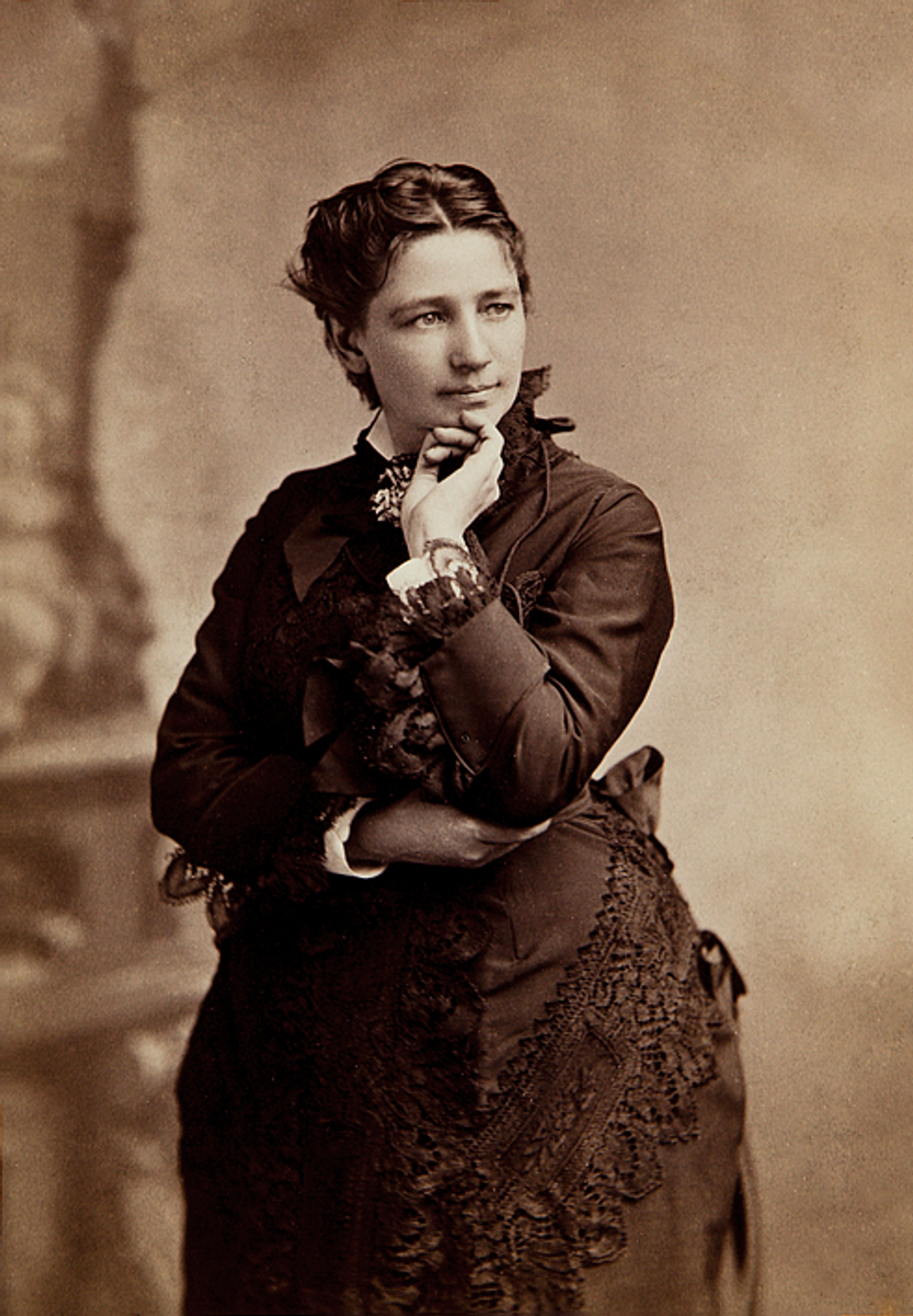 Victoria Claflin Woodhull, the first woman to run for president of the United States in 1872rce Harvard Art Museum/Fogg Museum, Historical Photographs and Special Visual Collections Department, Fine Arts Library via
 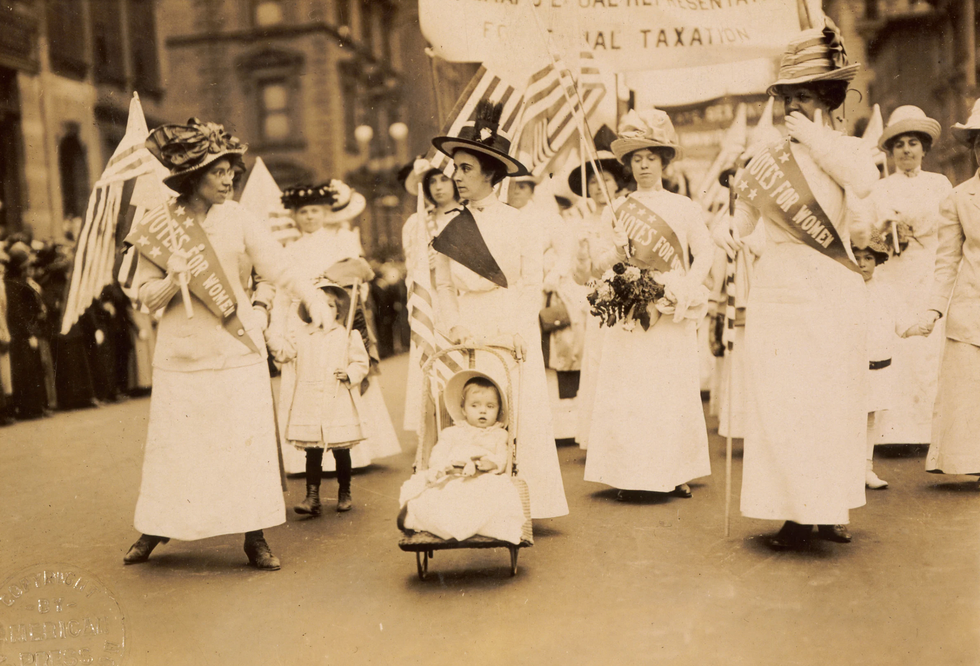 Suffragists matching for women's right to vote in the early 20th centuryCanva
 Amazon fulfillment centerCanva
 A worker transports a heavy boxCanva
Female shopper looking for help
21 products that are gaslighting us into thinking they’re essential when they’re not
Some things in life are actually necessary—clean water, decent healthcare, basic human decency. But then there are the things that feel like they’re gaslighting us. The things we’re told we can’t live without, even though we survived just fine before they existed. Things like "smart" fridges, lawn fertilizer services, and yes—whole body deodorant.
Recently, our sister-site Upworthy asked their Facebook audience the question: What's a product or service that feels like it's gaslighting all of us into thinking it's necessary? More than 8,000 responses poured in. The answers were passionate, funny, and surprisingly unified.
Here are 21 products, services, and systems people called out for pretending to be essential—when they might actually be optional, overpriced, or flat-out invented.
1. Whole body deodorant
"Take a shower," said Shannon H.
“How did we ever manage all those years without it!! 😂😵💫” added Karen R.
Others noted it may help people with medical conditions—but for the average person, it's definitely a marketing creation.
2. Health insurance
It topped the list. Erica L. explained: “My doctor prescribes, the pharmacist issues meds, nurses care for people, surgeons do surgery—Health Insurance stands between health care and patients and says no, exclusively on whether they think it’s financially effective to treat you.”
Important note: Health insurance can provide life-saving access for many—but what people are frustrated by here is the profit-first system, not care itself.
3. The wedding industry
Multiple people slammed the high cost of modern weddings.
JoElla B. put it plainly: “We spend too much time and money planning one day, and not enough thought on how to blend two lives in a mutually beneficial one.”
Others called out expensive dresses, venues, and pressure to perform for social media.
4. Bottled water
Carole D. said: “Water in plastic bottles! Get a cup!”
While bottled water has value in emergencies, it’s often just filtered tap water—sold for profit in plastic.
5. Baby product overload
“Most baby products,” wrote Kelli O. “They really aren’t as needy and complicated as companies want us to think.”
6. Fabric softener
“It’s bad for clothes, bad for the Earth, bad for the wallet, and totally unnecessary,” said Gail H.
Some experts agree—many softeners contain chemicals that can reduce fabric lifespan and irritate skin.
7. Smart appliances
“Adding ‘phone controls’ to every appliance instead of making them last as long as they used to,” wrote Sherry S.
When your fridge needs a software update, something’s gone off the rails.
8. Makeup and anti-aging products
“Anything anti-aging,” said Melissa T., “Please just let me age into the gargoyle I was meant to become.”
Others questioned products designed to “fix” eyelashes, eyebrows, pores, and graying hair.
April S. added, “Products that women are convinced they MUST have in order to be ‘beautiful’ and therefore ‘loved.’”
9. Cosmetic surgery
Ron P. called out the industry as a whole. And while body autonomy matters, many commenters questioned whether insecurities are being commodified and sold back to us.
10. Ticketmaster and “convenience fees”
“Let’s go back to waiting in line at a record store,” wrote Nicole C.
Zaida B. added: “Convenience fee for online purchases—then charging $10 more at the actual event.”
11. Engagement rings
James P. didn’t mince words: “Engagement rings.”
The diamond industry has long been criticized for manufactured scarcity and marketing-fueled necessity.
12. Lawn chemicals and services
“Plant native grasses and you don’t have the pests or need for constant watering,” wrote Jamie B.
Environmental groups have raised similar concerns over runoff and unnecessary pesticide use.
13. AI and generative tech
“This stuff squeezes the lifeblood and individuality out of the human experience,” said Teresa L.
Saskia D. and others echoed skepticism about its necessity, even as many of us are being pushed to use it.
14. Funeral services
Amy W. shared: “My parents both have already paid to have themselves cremated and are very adamant that they do not want anything big done for them. In their words, ‘I won’t care, I’m dead.’”
Of course, some families find comfort in tradition—but the cost and pressure can feel overwhelming and predatory.
15. Rinse and repeat
Amy D. nailed it: “It’s just to sell more. Not even sure you need it at all.”
16. Credit Card Surcharges
Shawn S. took aim at the extra fees popping up at checkout: “That is the cost of doing business and shouldn’t be the burden of the purchaser.”
Many questioned why customers are increasingly being asked to pay extra simply for the convenience of using a card.
17. Constant phone upgrades
“Apple are notorious for releasing the same shit every year,” said Steph S.
Diana H. added, “Needing to upgrade our phones so frequently.”
Built-in obsolescence and marketing cycles drive most of the demand.
18. Vitamins and supplements
“If I took every supplement they say I NEED I wouldn’t need food. Nor could I afford it,” said Tausha L.
19. Fake pockets on women’s pants
Jessica W. said, “I have to buy men’s pants for work because women’s pants would just get torn up too fast!”
Form over function, and then they charge more for it.
20. Disposable everything
“The ‘convenience’ of disposable everything,” said Rick R.
It’s killing the planet—and draining wallets.
21. Tipping
“I’m sick of supplementing for corporations that refuse to pay a living wage,” wrote Susan V.
Tipping culture has evolved into something far removed from its original intent, and for many, it now feels like a burden shifted onto the customer.
The bigger picture
People aren’t saying all these things should vanish tomorrow. But when we start seeing convenience sold as necessity, and insecurity turned into billion-dollar markets, it's worth asking: who benefits from all of this?
And more importantly—who pays?
This article originally appeared earlier this year.