



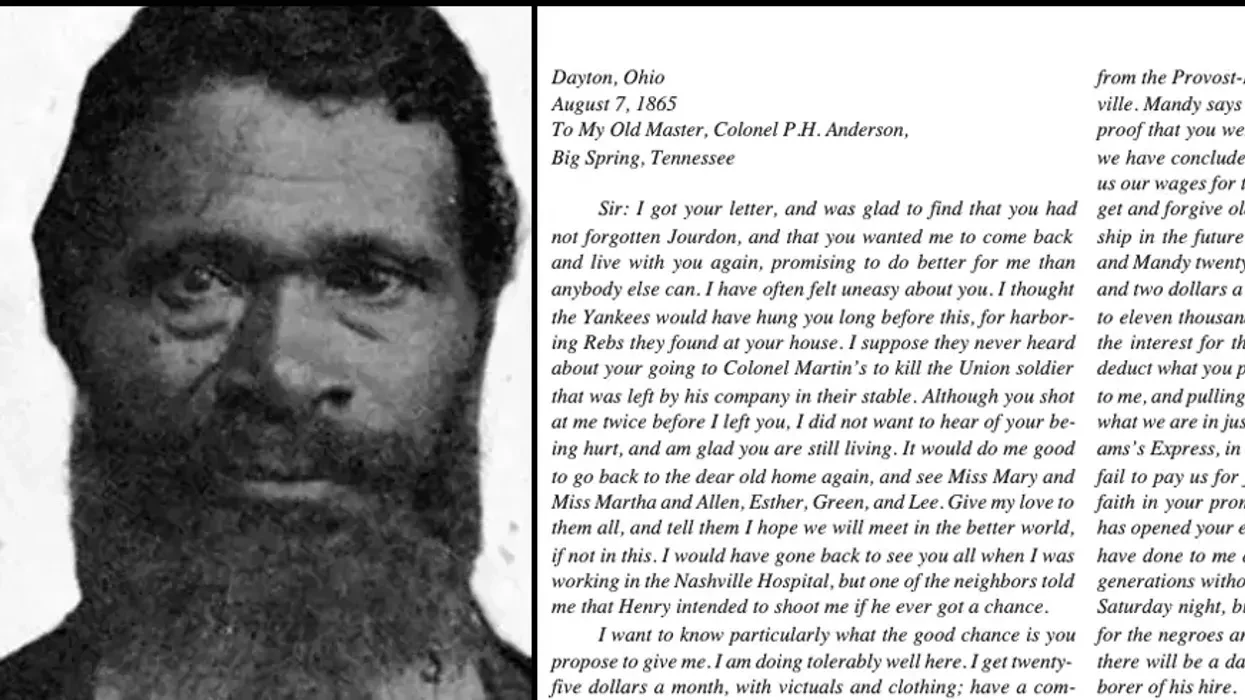
In 1825, at approximately age 8, Jordan Anderson (sometimes spelled “Jordon”) was sold into slavery and served the Anderson family for 39 years. In 1864, the Union Army camped on the Anderson plantation, liberating Jordan and his wife, Amanda.
The couple eventually made it safely to Dayton, Ohio, where, in July 1865, Jordan received a letter from his former owner, Colonel P.H. Anderson. The letter kindly asked Jordan to return to work on the plantation because it had fallen into disarray during the war.
On Aug. 7, 1865, Jordan dictated his response through his new boss, Valentine Winters, and it was published in the Cincinnati Commercial. The letter, entitled “Letter from a Freedman to His Old Master," was not only hilarious but showed compassion, defiance, and dignity.
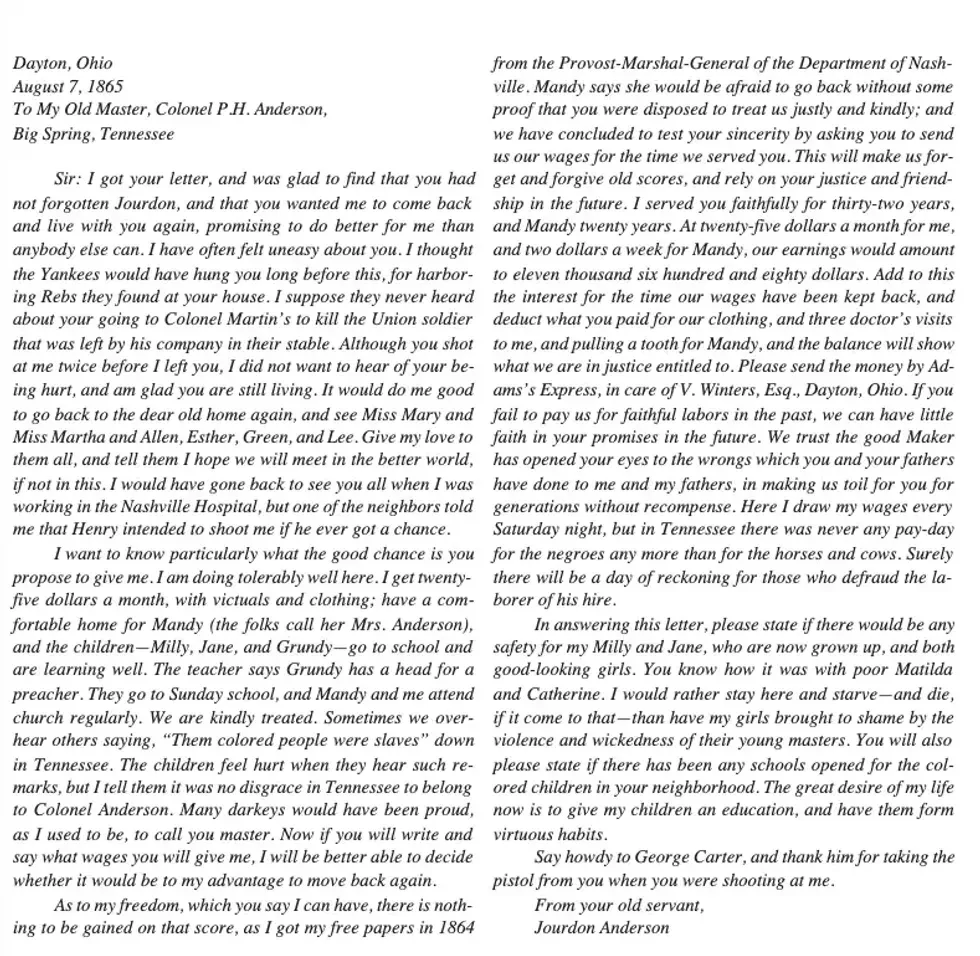 The letter from Jordan Anderson to his former masterReddit
That year, the letter was republished in the New York Daily Tribune and Lydia Maria Child's “The Freedman's Book.”
The letter mentions a “Miss Mary" (Col. Anderson's Wife), “Martha" (Col. Anderson's daughter), Henry (most likely Col. Anderson's son), and George Carter (a local carpenter).
Dayton, Ohio,
August 7, 1865
To My Old Master, Colonel P.H. Anderson, Big Spring, Tennessee
"Sir: I got your letter, and was glad to find that you had not forgotten Jordon, and that you wanted me to come back and live with you again, promising to do better for me than anybody else can. I have often felt uneasy about you. I thought the Yankees would have hung you long before this, for harboring Rebs they found at your house. I suppose they never heard about your going to Colonel Martin's to kill the Union soldier that was left by his company in their stable. Although you shot at me twice before I left you, I did not want to hear of your being hurt, and am glad you are still living. It would do me good to go back to the dear old home again, and see Miss Mary and Miss Martha and Allen, Esther, Green, and Lee. Give my love to them all, and tell them I hope we will meet in the better world, if not in this. I would have gone back to see you all when I was working in the Nashville Hospital, but one of the neighbors told me that Henry intended to shoot me if he ever got a chance."
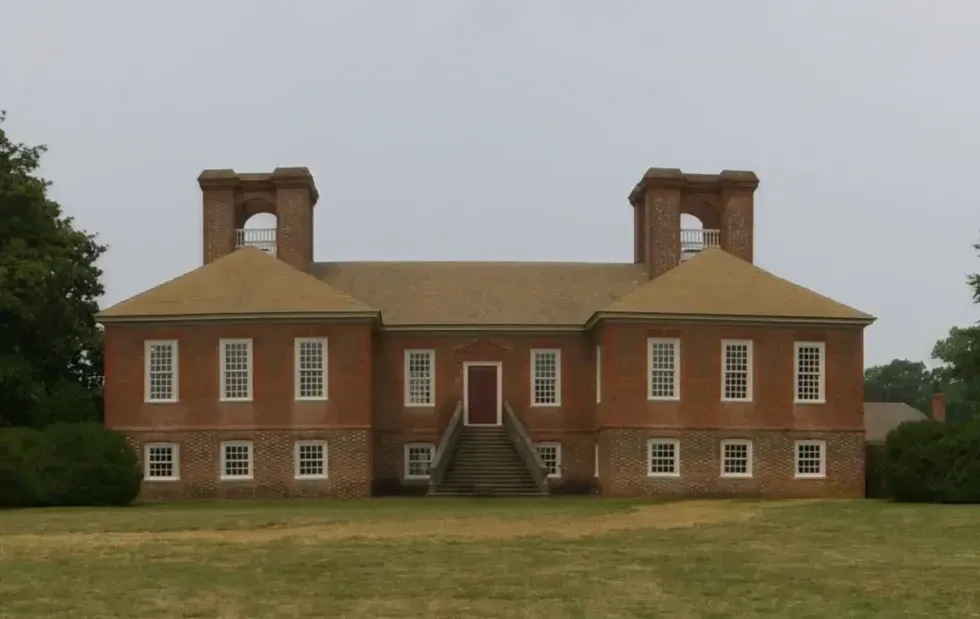 Jordan Anderson's former plantation in the SouthCanva
"I want to know particularly what the good chance is you propose to give me. I am doing tolerably well here. I get twenty-five dollars a month, with victuals and clothing; have a comfortable home for Mandy, — the folks call her Mrs. Anderson, — and the children — Milly, Jane, and Grundy — go to school and are learning well. The teacher says Grundy has a head for a preacher. They go to Sunday school, and Mandy and me attend church regularly. We are kindly treated. Sometimes we overhear others saying, "Them colored people were slaves" down in Tennessee. The children feel hurt when they hear such remarks; but I tell them it was no disgrace in Tennessee to belong to Colonel Anderson. Many darkeys would have been proud, as I used to be, to call you master. Now if you will write and say what wages you will give me, I will be better able to decide whether it would be to my advantage to move back again."
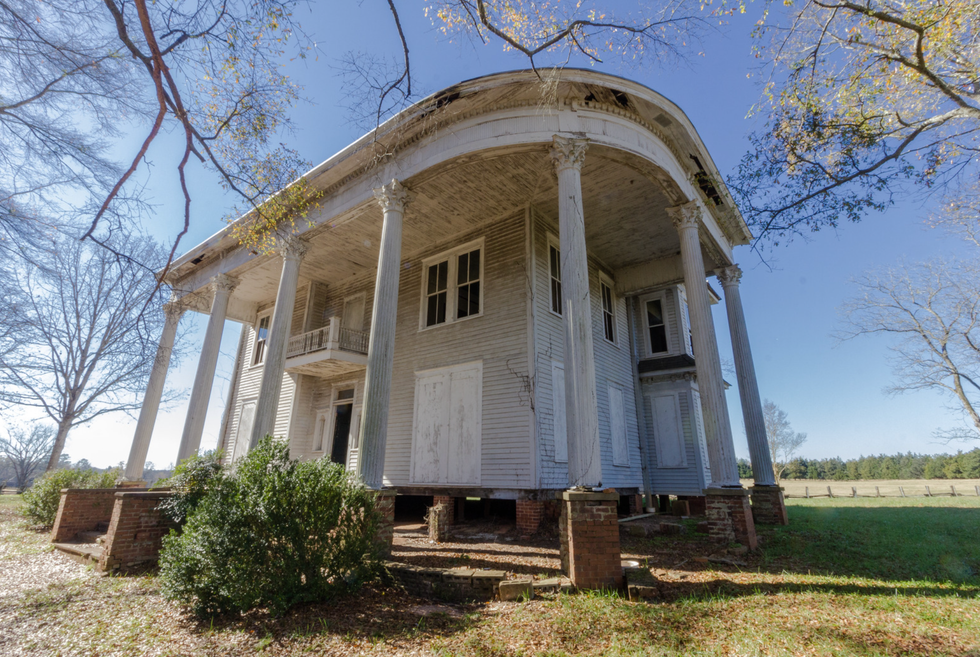 A dilapidated former plantation in the SouthCanva
"As to my freedom, which you say I can have, there is nothing to be gained on that score, as I got my free papers in 1864 from the Provost-Marshal-General of the Department of Nashville. Mandy says she would be afraid to go back without some proof that you were disposed to treat us justly and kindly; and we have concluded to test your sincerity by asking you to send us our wages for the time we served you. This will make us forget and forgive old scores, and rely on your justice and friendship in the future. I served you faithfully for thirty-two years, and Mandy twenty years. At twenty-five dollars a month for me, and two dollars a week for Mandy, our earnings would amount to eleven thousand six hundred and eighty dollars."
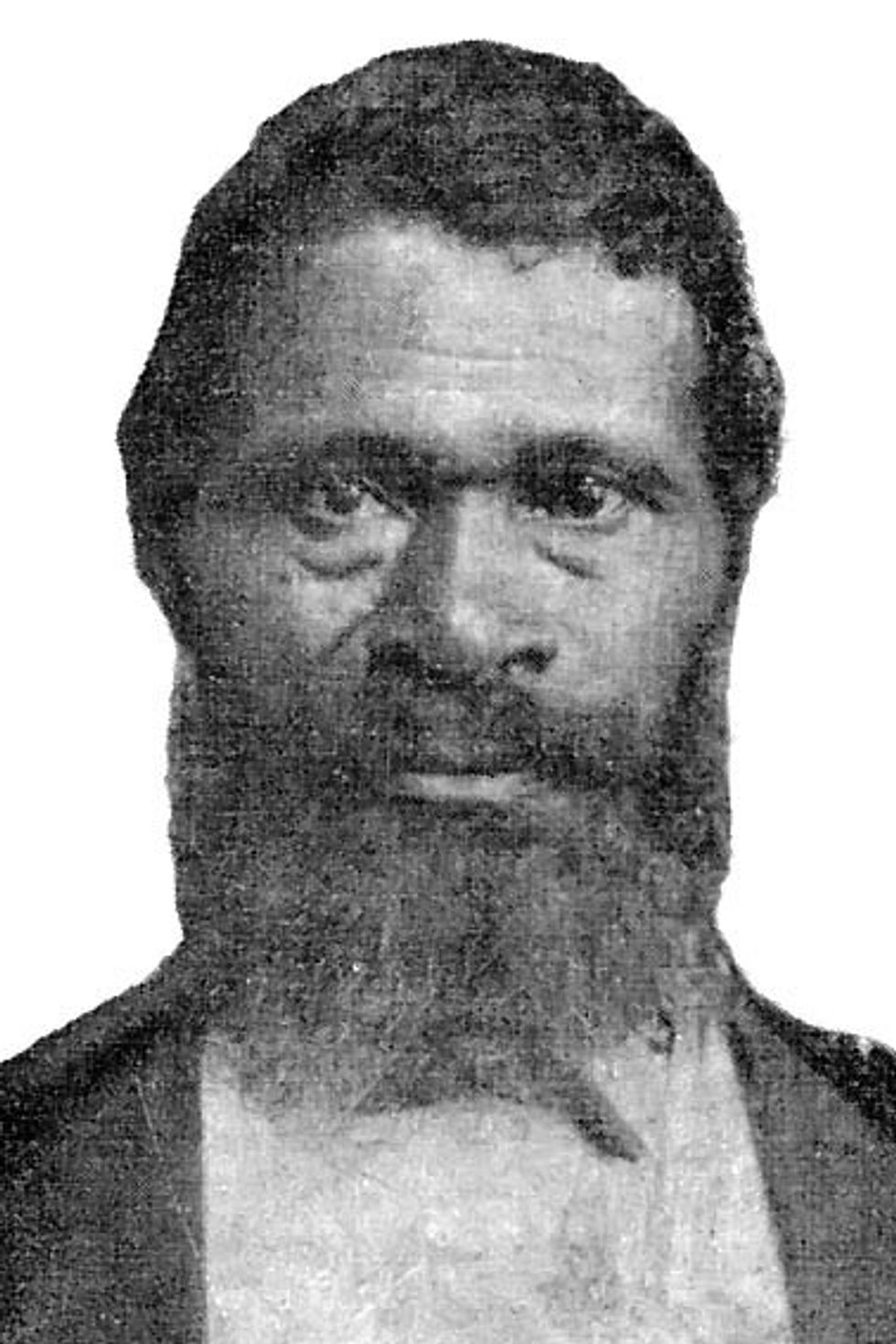 Photo of Jordan AndersonWikimedia Commons
"Add to this the interest for the time our wages have been kept back, and deduct what you paid for our clothing, and three doctor's visits to me, and pulling a tooth for Mandy, and the balance will show what we are in justice entitled to. Please send the money by Adams's Express, in care of V. Winters, Esq., Dayton, Ohio. If you fail to pay us for faithful labors in the past, we can have little faith in your promises in the future. We trust the good Maker has opened your eyes to the wrongs which you and your fathers have done to me and my fathers, in making us toil for you for generations without recompense. Here I draw my wages every Saturday night; but in Tennessee there was never any pay-day for the negroes any more than for the horses and cows. Surely there will be a day of reckoning for those who defraud the laborer of his hire."
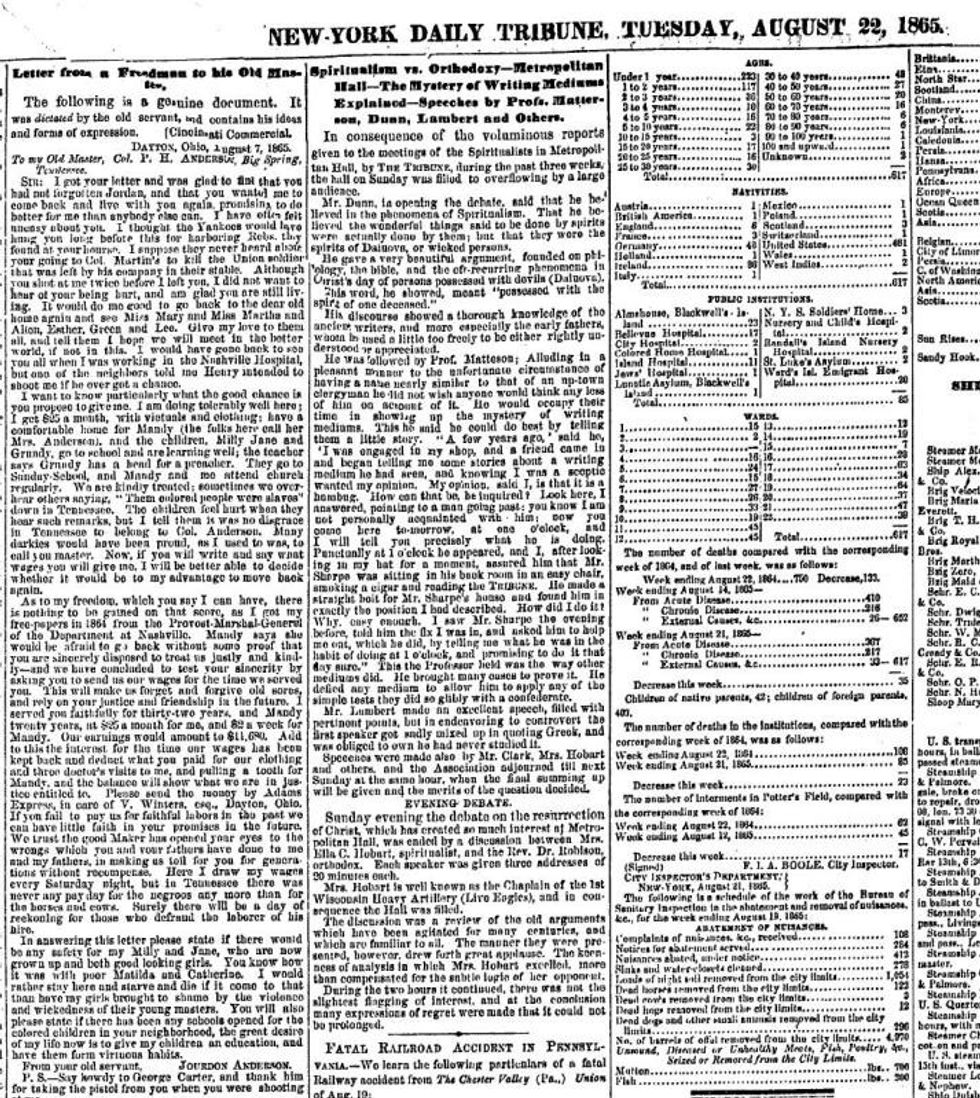 Newspaper print of Anderson's letter in the New-York Daily TribuneWikimedia Commons
"In answering this letter, please state if there would be any safety for my Milly and Jane, who are now grown up, and both good-looking girls. You know how it was with poor Matilda and Catherine. I would rather stay here and starve — and die, if it come to that — than have my girls brought to shame by the violence and wickedness of their young masters. You will also please state if there has been any schools opened for the colored children in your neighborhood. The great desire of my life now is to give my children an education, and have them form virtuous habits."
"Say howdy to George Carter, and thank him for taking the pistol from you when you were shooting at me."
From your old servant,
Jordon Anderson
Learn more about Jordan Anderson here.
This article originally appeared six years ago.









 A woman feeling under the weather lies in bedCanva
 A Carbon monoxide alarmCanva
 A happy woman sips from a coffee mugCanva
 Representative Image: Busy hands working on a garment.
  "SPEECHLESS!" Facebook I
 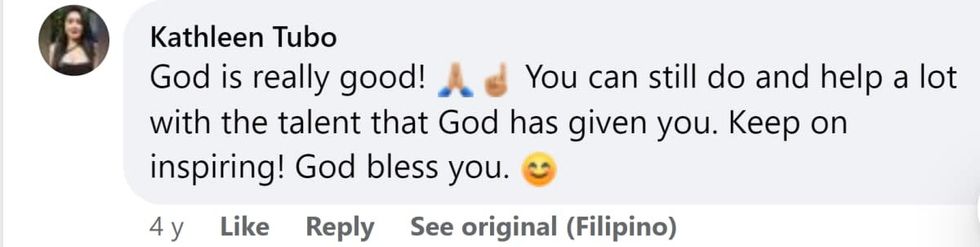 "God is really good!"Facebook I
 A family holding hands.
 Representative Image: Money changing hands.
  Representative Image: It seemed like a great tip at first.
  Image Source: Reddit |
  Image Source: Reddit |
  Image Source: Reddit |
 Representative Image: Disney World made the perfect surprise.
  Image source: TikTok |
  Image source: TikTok |
 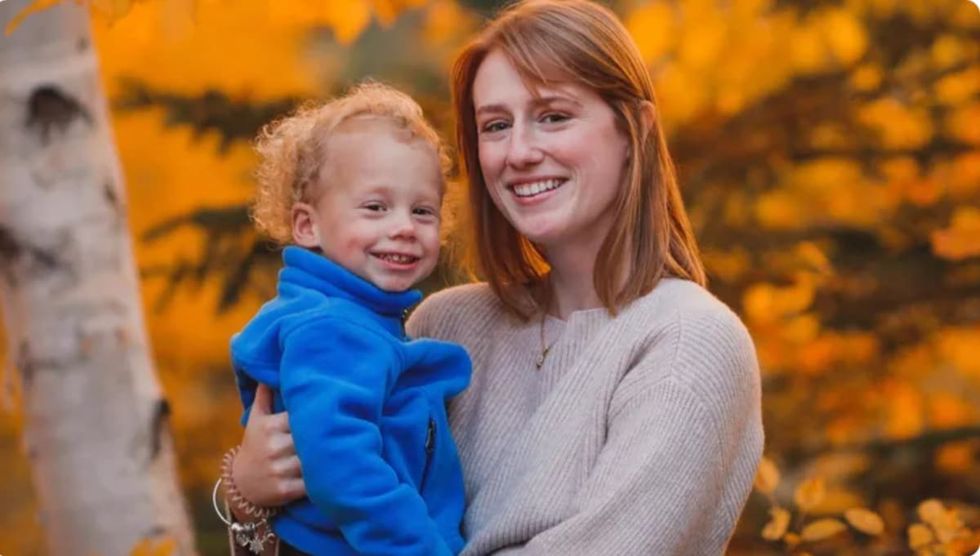 Image Source:
 An elderly man walks down an icy roadCanva
  An elderly man grilling at a partyCanva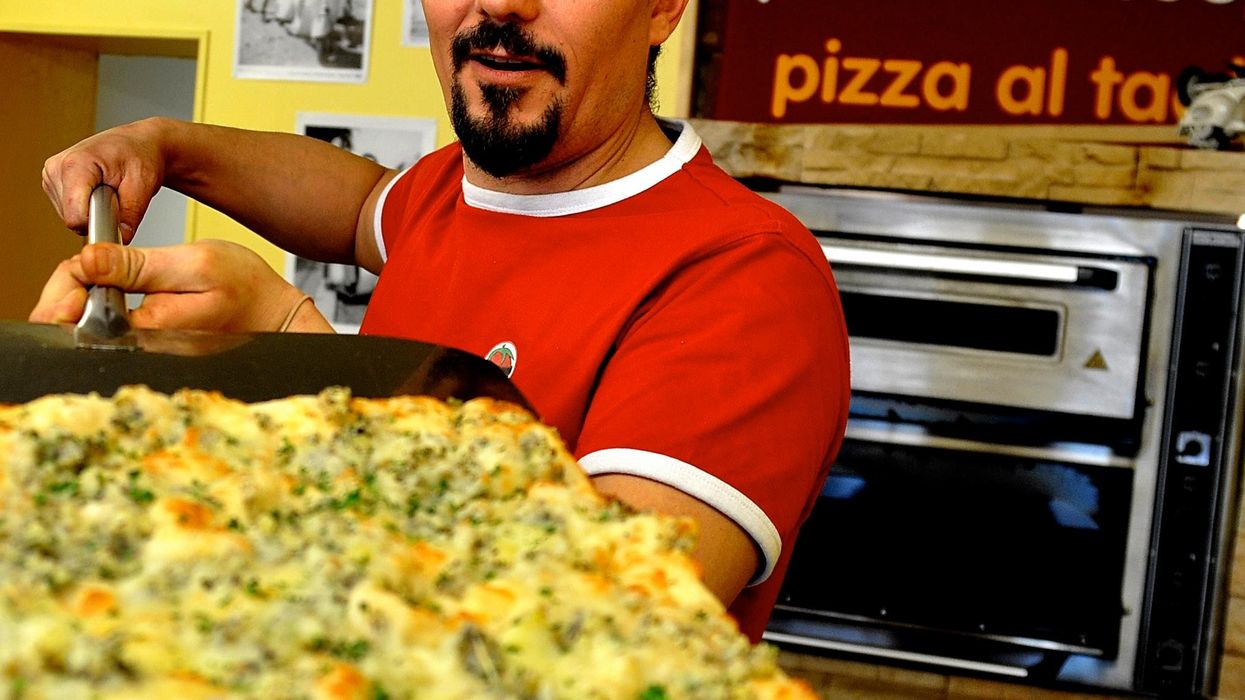
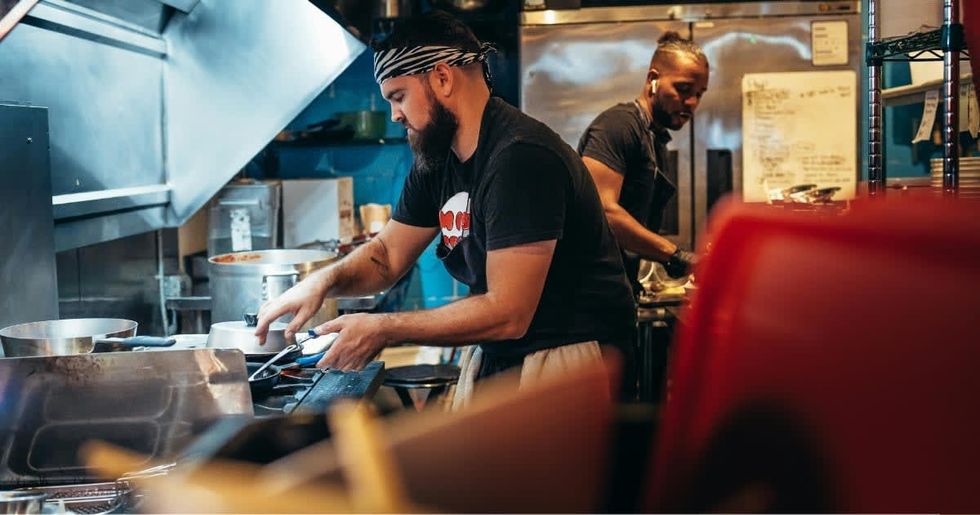 Representative Image: Making pizzas for hungry people. Pexels I Photo by Jvxhn Visuals
 Representative Image Source: Pexels I Photo by Polina Tankilevitch
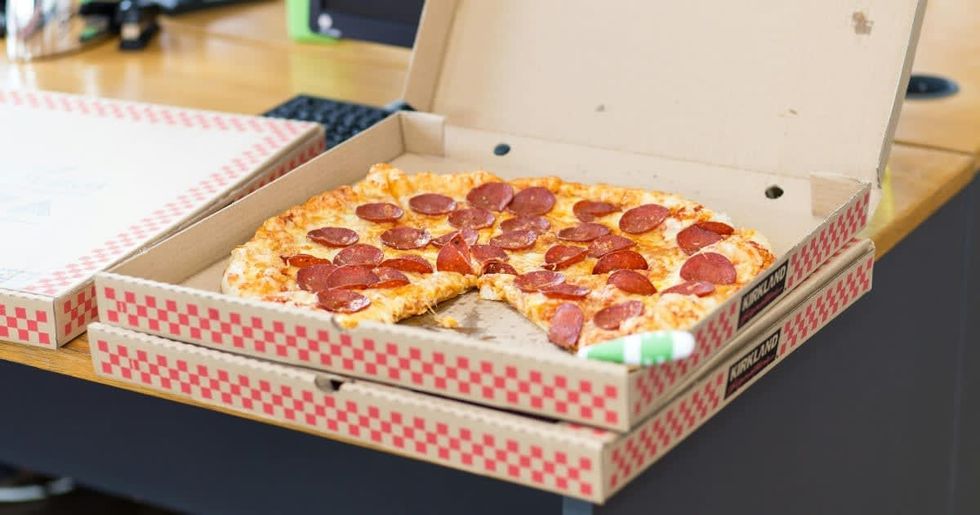 Representative Image: Is there anything better than pepperoni? Pexels I Photo by Pixabay
 "This story made my whole night better." Reddit I
Female shopper looking for help
21 products that are gaslighting us into thinking they’re essential when they’re not
Some things in life are actually necessary—clean water, decent healthcare, basic human decency. But then there are the things that feel like they’re gaslighting us. The things we’re told we can’t live without, even though we survived just fine before they existed. Things like "smart" fridges, lawn fertilizer services, and yes—whole body deodorant.
Recently, our sister-site Upworthy asked their Facebook audience the question: What's a product or service that feels like it's gaslighting all of us into thinking it's necessary? More than 8,000 responses poured in. The answers were passionate, funny, and surprisingly unified.
Here are 21 products, services, and systems people called out for pretending to be essential—when they might actually be optional, overpriced, or flat-out invented.
1. Whole body deodorant
"Take a shower," said Shannon H.
“How did we ever manage all those years without it!! 😂😵💫” added Karen R.
Others noted it may help people with medical conditions—but for the average person, it's definitely a marketing creation.
2. Health insurance
It topped the list. Erica L. explained: “My doctor prescribes, the pharmacist issues meds, nurses care for people, surgeons do surgery—Health Insurance stands between health care and patients and says no, exclusively on whether they think it’s financially effective to treat you.”
Important note: Health insurance can provide life-saving access for many—but what people are frustrated by here is the profit-first system, not care itself.
3. The wedding industry
Multiple people slammed the high cost of modern weddings.
JoElla B. put it plainly: “We spend too much time and money planning one day, and not enough thought on how to blend two lives in a mutually beneficial one.”
Others called out expensive dresses, venues, and pressure to perform for social media.
4. Bottled water
Carole D. said: “Water in plastic bottles! Get a cup!”
While bottled water has value in emergencies, it’s often just filtered tap water—sold for profit in plastic.
5. Baby product overload
“Most baby products,” wrote Kelli O. “They really aren’t as needy and complicated as companies want us to think.”
6. Fabric softener
“It’s bad for clothes, bad for the Earth, bad for the wallet, and totally unnecessary,” said Gail H.
Some experts agree—many softeners contain chemicals that can reduce fabric lifespan and irritate skin.
7. Smart appliances
“Adding ‘phone controls’ to every appliance instead of making them last as long as they used to,” wrote Sherry S.
When your fridge needs a software update, something’s gone off the rails.
8. Makeup and anti-aging products
“Anything anti-aging,” said Melissa T., “Please just let me age into the gargoyle I was meant to become.”
Others questioned products designed to “fix” eyelashes, eyebrows, pores, and graying hair.
April S. added, “Products that women are convinced they MUST have in order to be ‘beautiful’ and therefore ‘loved.’”
9. Cosmetic surgery
Ron P. called out the industry as a whole. And while body autonomy matters, many commenters questioned whether insecurities are being commodified and sold back to us.
10. Ticketmaster and “convenience fees”
“Let’s go back to waiting in line at a record store,” wrote Nicole C.
Zaida B. added: “Convenience fee for online purchases—then charging $10 more at the actual event.”
11. Engagement rings
James P. didn’t mince words: “Engagement rings.”
The diamond industry has long been criticized for manufactured scarcity and marketing-fueled necessity.
12. Lawn chemicals and services
“Plant native grasses and you don’t have the pests or need for constant watering,” wrote Jamie B.
Environmental groups have raised similar concerns over runoff and unnecessary pesticide use.
13. AI and generative tech
“This stuff squeezes the lifeblood and individuality out of the human experience,” said Teresa L.
Saskia D. and others echoed skepticism about its necessity, even as many of us are being pushed to use it.
14. Funeral services
Amy W. shared: “My parents both have already paid to have themselves cremated and are very adamant that they do not want anything big done for them. In their words, ‘I won’t care, I’m dead.’”
Of course, some families find comfort in tradition—but the cost and pressure can feel overwhelming and predatory.
15. Rinse and repeat
Amy D. nailed it: “It’s just to sell more. Not even sure you need it at all.”
16. Credit Card Surcharges
Shawn S. took aim at the extra fees popping up at checkout: “That is the cost of doing business and shouldn’t be the burden of the purchaser.”
Many questioned why customers are increasingly being asked to pay extra simply for the convenience of using a card.
17. Constant phone upgrades
“Apple are notorious for releasing the same shit every year,” said Steph S.
Diana H. added, “Needing to upgrade our phones so frequently.”
Built-in obsolescence and marketing cycles drive most of the demand.
18. Vitamins and supplements
“If I took every supplement they say I NEED I wouldn’t need food. Nor could I afford it,” said Tausha L.
19. Fake pockets on women’s pants
Jessica W. said, “I have to buy men’s pants for work because women’s pants would just get torn up too fast!”
Form over function, and then they charge more for it.
20. Disposable everything
“The ‘convenience’ of disposable everything,” said Rick R.
It’s killing the planet—and draining wallets.
21. Tipping
“I’m sick of supplementing for corporations that refuse to pay a living wage,” wrote Susan V.
Tipping culture has evolved into something far removed from its original intent, and for many, it now feels like a burden shifted onto the customer.
The bigger picture
People aren’t saying all these things should vanish tomorrow. But when we start seeing convenience sold as necessity, and insecurity turned into billion-dollar markets, it's worth asking: who benefits from all of this?
And more importantly—who pays?
This article originally appeared earlier this year.